

- 01AI boom lifts ASX small/mid caps.
- 02AI infra and software demand surges.
- 03SaaS model fuels durable growth.
- 04Big AI spend backs software gains.
Artificial intelligence has become impossible for investors to ignore. Over the past two years, AI has transformed from a niche technology discussion into one of the most powerful forces driving global capital markets.
Trillions of dollars are now flowing into data centres, cloud infrastructure, software platforms and automation technologies as businesses race to position themselves for the next phase of digital transformation.
While much of the attention has centred on the world's technology giants, we believe some of the most attractive opportunities may be emerging much closer to home.
Across the ASX small and mid-cap universe, a growing number of companies are developing software platforms, enterprise solutions and AI enabled technologies that address real world business challenges.
These businesses may not dominate headlines today, but many operate in markets experiencing powerful structural growth and possess the ability to scale rapidly if execution remains strong.
The broader backdrop remains highly supportive. According to Gartner, worldwide AI spending is forecast to reach approximately US$2.6 trillion in 2026, while global IT spending is expected to exceed US$6.3 trillion as businesses continue investing heavily in software, cloud infrastructure and digital transformation initiatives.
AI software spending alone is projected to exceed US$450 billion this year, highlighting the enormous addressable markets being created across the technology ecosystem. For investors willing to look beyond the largest names, these trends are creating a fertile hunting ground for future growth opportunities.
Following the Money
One of the strongest indicators of a durable investment theme is capital commitment. Today, we are witnessing one of the largest technology investment cycles in modern history.
Global technology leaders continue to deploy hundreds of billions of dollars into AI infrastructure, cloud computing capacity and advanced data centres as demand for computing power accelerates.
Recent estimates suggest major technology companies could collectively invest more than US$700 billion in AI-related infrastructure during 2026 alone.
Importantly, this spending is not occurring in isolation. Every new data centre requires software. Every AI deployment requires platforms, integrations and applications.
Every organisation seeking productivity improvements requires tools capable of extracting value from increasingly large datasets.
This creates a significant opportunity for software businesses that sit further up the value chain. We believe many investors still underestimate how broad AI adoption is becoming.
Banks are deploying AI to improve customer service. Healthcare providers are using it to assist diagnosis and administration. Retailers are optimising inventory management. Mining companies are leveraging automation and predictive analytics to improve operational efficiency.
Why SaaS Remains Such a Powerful Business Model
The SaaS model continues to be one of the most attractive structures within the technology sector. Unlike traditional businesses that often require significant ongoing capital investment to support growth, software companies can frequently scale revenue far faster than expenses.
Once a platform has been developed, additional customers can often be added at relatively low incremental cost.
This creates the potential for recurring revenue, expanding margins and strong cash flow generation as customer bases mature. For investors, recurring revenue remains particularly valuable because it provides greater visibility over future earnings.
Companies with sticky customer relationships and subscription-based revenue models can often navigate economic cycles more effectively than businesses dependent on one off sales.
When combined with AI functionality, these characteristics can become even more powerful. Rather than replacing existing software, AI is increasingly enhancing it.
Businesses are integrating AI features into products customers already use, creating opportunities to increase customer engagement, improve retention and expand average revenue per user.
The result is a combination of structural growth and recurring revenue that remains highly attractive from a long-term investment perspective.
The Tailwinds Continue to Build
Despite ongoing market volatility, the long-term outlook for the AI and SaaS sectors remains constructive. Enterprise adoption continues to expand, cloud computing remains a strategic priority for organisations globally and AI functionality is increasingly becoming embedded across existing software ecosystems.
Recent industry forecasts suggest AI infrastructure spending alone could exceed US$1.4 trillion this year, while AI software spending is expected to approach half a trillion dollars globally.
Perhaps more importantly, many industry observers believe enterprise adoption is still in its early stages, with businesses only beginning to explore the productivity gains available through AI-enabled workflows.
In our view, this is an important distinction. The first phase of the AI boom was largely about building infrastructure. The next phase is increasingly about monetisation, adoption and practical business applications.
That shift should create opportunities for software providers capable of delivering measurable outcomes to customers.
Five ASX Companies Positioned to Capture the Opportunity
Against this backdrop, we have identified five ASX listed companies that we believe offer compelling exposure to the AI and SaaS theme.
Each business operates within attractive markets, possesses characteristics that support long-term scalability and stands to benefit from the growing demand for software, automation and digital transformation solutions.
While individual risks naturally differ, all five companies have qualities that we believe warrant closer attention as the AI investment cycle continues to evolve.
Enjoy my Research and Stock Picks? Follow me on Linkedin for more updates.
Megaport: Linking Cloud and AI Growth
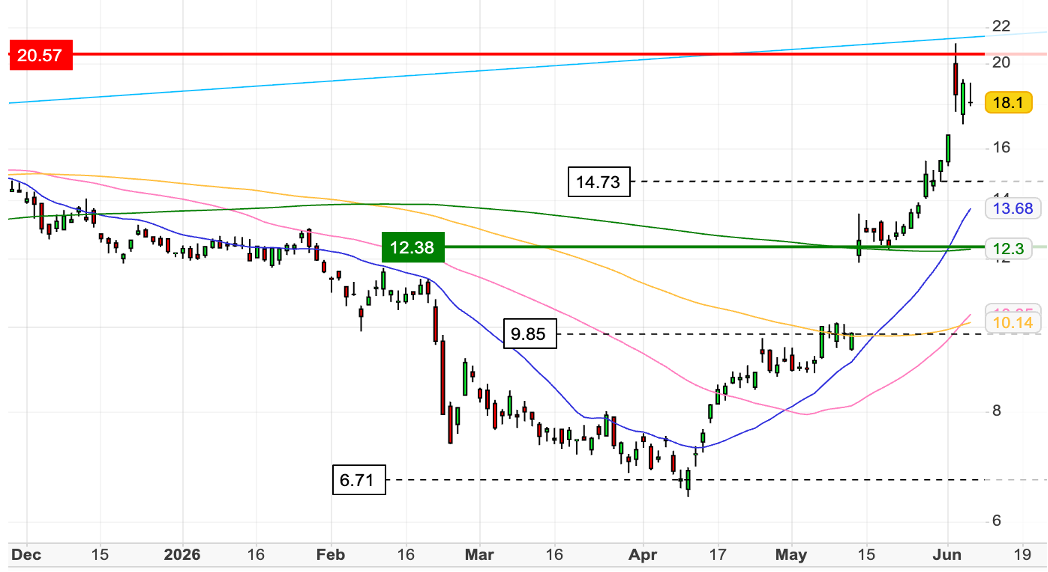
When investors discuss the infrastructure enabling the artificial intelligence revolution, attention often turns to data centres and semiconductor manufacturers. Yet one of the less visible but equally important pieces of the digital ecosystem is connectivity.
This is where Megaport (ASX: MP1) has carved out a unique position. The company operates a global Network as a Service platform that allows enterprises to connect directly to cloud providers, technology partners and data centres through software-defined networking.
Rather than relying on traditional telecommunications infrastructure that can take weeks or months to provision, customers can establish connections in minutes through Megaport's platform. As organisations continue shifting applications, data and AI workloads into cloud environments, the importance of flexible and scalable connectivity continues to increase.
The company's latest FY25 result highlighted why investors have become increasingly interested in the business, alongside some of the short-term friction that comes with rapid infrastructure scaling.
Megaport reported a milestone Annual Recurring Revenue (ARR) of $243.8 million, up 20% year-on-year, and a reported EBITDA of $62.3 million. However, to properly evaluate performance against management's initial target metrics, this EBITDA maps down to $57.0 million when fully adjusted for foreign exchange fluctuations and one-off lease accounting shifts under AASB 16.
This positioned the operational result at the lower boundary of their previous market guidance, reflecting a deliberate, high-conviction decision by management to front-load capital into accelerated growth channels.
During the year, the company successfully expanded its global reach, adding 115 new enabled data centres to its footprint while achieving an 18% lift in high-value enterprise accounts. Importantly, management noted that strategic product innovation accounted for an impressive one-quarter of the total ARR growth, demonstrating that existing clients are scaling up their ecosystem usage.
As artificial intelligence applications generate increasingly heavy data traffic between distributed cloud infrastructure, sovereign environments, and end users, high-capacity networking pipelines are becoming paramount.
Macquarie Technology Group: Positioned at the Centre of Australia's AI Infrastructure Boom
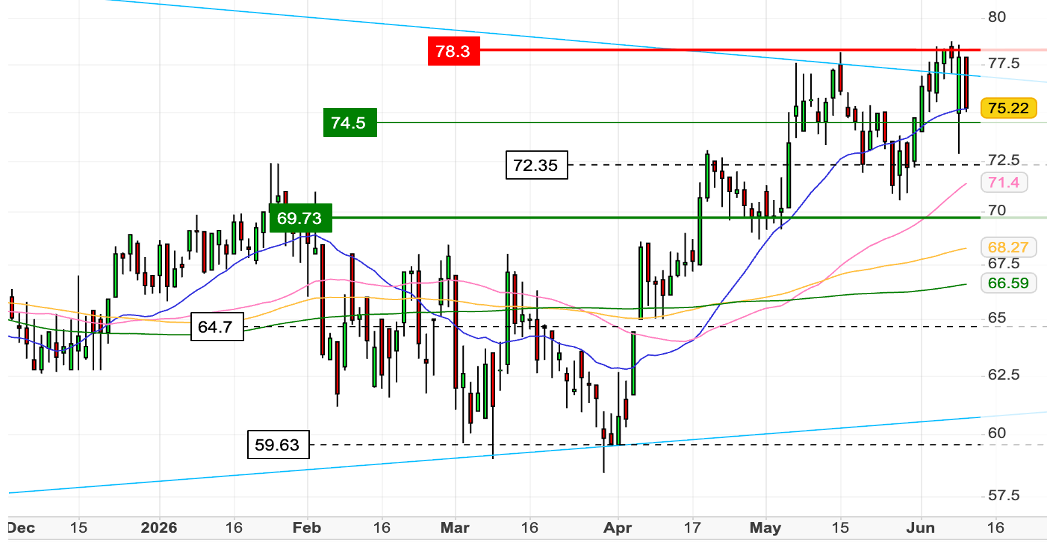
Macquarie Technology Group (ASX: MAQ) has established itself as one of Australia's most diversified digital infrastructure providers, combining data centres, cloud services, cyber security, telecommunications and government technology solutions under a single platform.
Through its Intellicentre data centre network and secure cloud offerings, the company provides critical infrastructure to government agencies, enterprises and technology customers. This diversified model gives Macquarie Technology exposure to multiple high-growth areas of the digital economy while reducing reliance on any single revenue stream.
As organisations increasingly prioritise digital resilience, cyber security and cloud adoption, demand for the company's services continues to expand.
The most powerful catalyst supporting the investment case today is the accelerating demand for high-density, AI-focused infrastructure. Macquarie is addressing this megatrend directly via its flagship 47MW IC3 Super West data centre development in Sydney’s Macquarie Park.
The facility reached its major "topping out" milestone and is tracking perfectly on schedule to open in September 2026. Purpose-built for intensive GPU workloads, IC3 Super West integrates advanced liquid cooling and direct-to-chip architectures.
To capture immediate market demand, Macquarie recently upsized its debt facilities to $500 million, allowing it to fast-track long-lead equipment and accelerate capacity delivery up to 19MW of the site's total footprint. Looking further ahead, the company has secured options for a new campus capable of delivering an additional 150MW+, positioning it across a multi-year 200MW development pipeline.
While the long-term infrastructure runway is immense, near-term financials reflect a period of intensive corporate building and investment. Group EBITDA for FY26 is guided at a balanced $114 million to $117 million, reflecting steady, incremental growth across its core Cloud, Security & Government (CS&G) divisions alongside deliberate, ongoing investment into personnel and next generation sovereign AI security frameworks.
Crucially, the business remains highly resilient, with 95% of group revenue driven by predictable, contracted monthly recurring revenue. Macquarie remains uniquely positioned in the public sector as the only local provider to have both its cloud and data centre services certified to the federal government’s strict "Strategic" sovereign security level.
Dicker Data: AI, Cloud and Enterprise Technology Investment
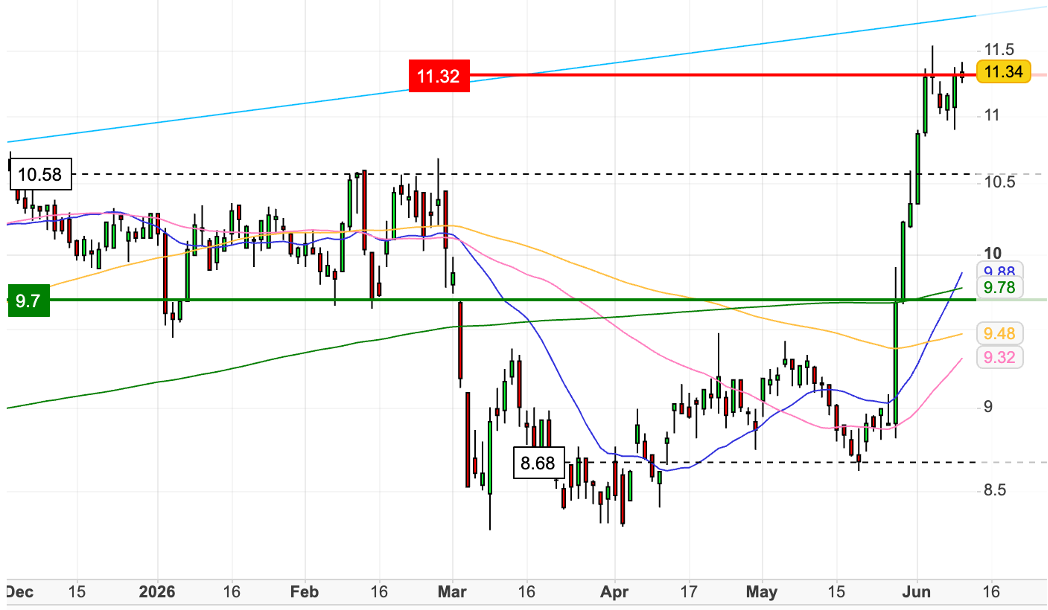
While many investors focus on software developers and hardware manufacturers, Dicker Data (ASX: DDR) provides exposure to a different part of the technology value chain. The company is one of Australia's largest technology distributors, supplying hardware, software, cloud solutions and cyber security products to thousands of resellers and enterprise customers.
Through long-standing relationships with many of the world's leading technology vendors, Dicker Data occupies a critical position within Australia's technology ecosystem. Whether businesses are upgrading infrastructure, implementing cloud solutions or investing in AI-related technologies, Dicker Data often sits at the centre of those transactions.
The company's latest FY25 result demonstrated the strength of these underlying industry trends. Revenue increased to $3.88 billion while net operating profit before tax rose to $124.7 million.
One of the most encouraging aspects of the result was the continued expansion of subscription and recurring revenue, which grew by more than 22% during the year. This reflects the ongoing shift towards cloud-based services and software subscriptions, creating a more predictable earnings profile.
Management also highlighted strong demand associated with artificial intelligence infrastructure deployments and the upcoming Windows 10 refresh cycle, both of which are encouraging businesses to invest in new technology solutions. These trends are expected to support technology spending across multiple sectors over the coming years.
NEXTDC: Owning the Infrastructure Powering Australia's AI and Cloud Expansion
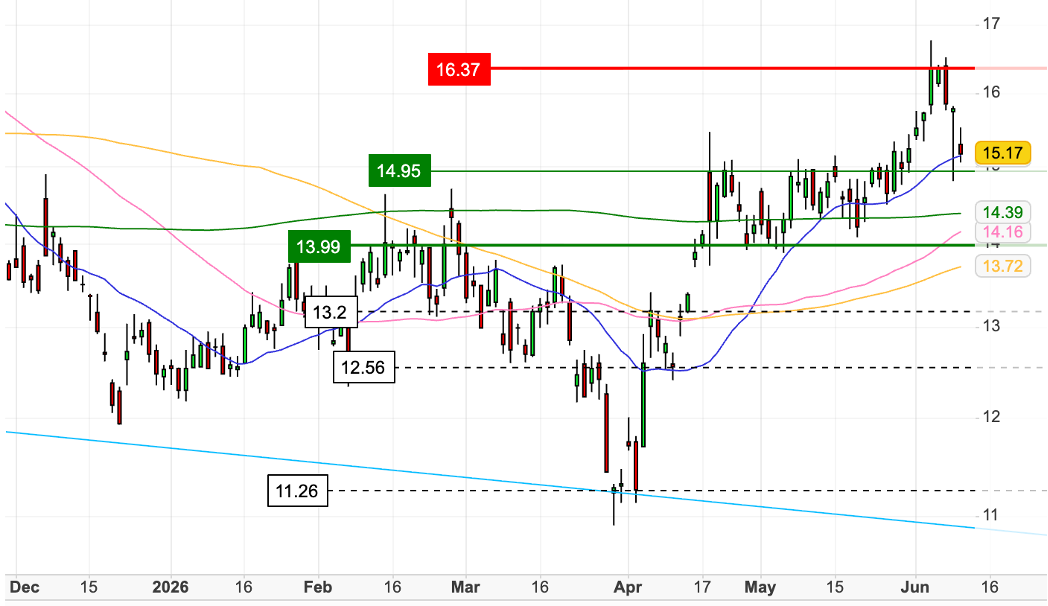
Few companies offer more direct exposure to the growth of artificial intelligence and cloud computing than NEXTDC (ASX: NXT). The company owns and operates a portfolio of carrier-neutral data centres that provide the physical infrastructure required to support digital services, cloud platforms and AI applications. As enterprises generate larger volumes of data and increasingly migrate workloads to the cloud, demand for secure and scalable data centre capacity continues to rise. NEXTDC has spent years building a national footprint of premium facilities, positioning the company as one of Australia's most important digital infrastructure operators.
The growth outlook remains tightly bound to an unprecedented surge in demand from cloud and AI hyperscalers. Following monumental customer contract wins - most notably a record-breaking 250MW single-quarter capacity commitment centered around its S4 facility in Western Sydney - NEXTDC’s pro forma contracted utilisation has surged to a massive 667MW. Furthermore, its forward order book (contracted capacity locked in but yet to commence billing) has expanded to 544MW. This backlog provides extraordinary multi-year visibility into future revenue growth, with the forward pipeline expected to generate more than $1 billion in contracted EBITDA as facilities progressively power up and convert to active billing through to FY30.
To support this aggressive development timeline and fund the purchase of long-lead infrastructure items, NEXTDC has significantly upscaled its financial runway. Capital expenditure guidance for FY26 has been lifted to between $2.7 billion and $3.0 billion, backed by an extensive $2.2 billion capital plan and over $8.4 billion in total pro forma liquidity via fresh equity, hybrid securities, and new senior debt commitments. Because industry wide demand for data centre capacity continues to outpace available power allocations and supply in key tier one markets, NEXTDC’s massive funding moat and approved development pathways firmly position it as a primary beneficiary of the structural AI rollout.
Data#3: Navigating the AI and Cyber Security Era
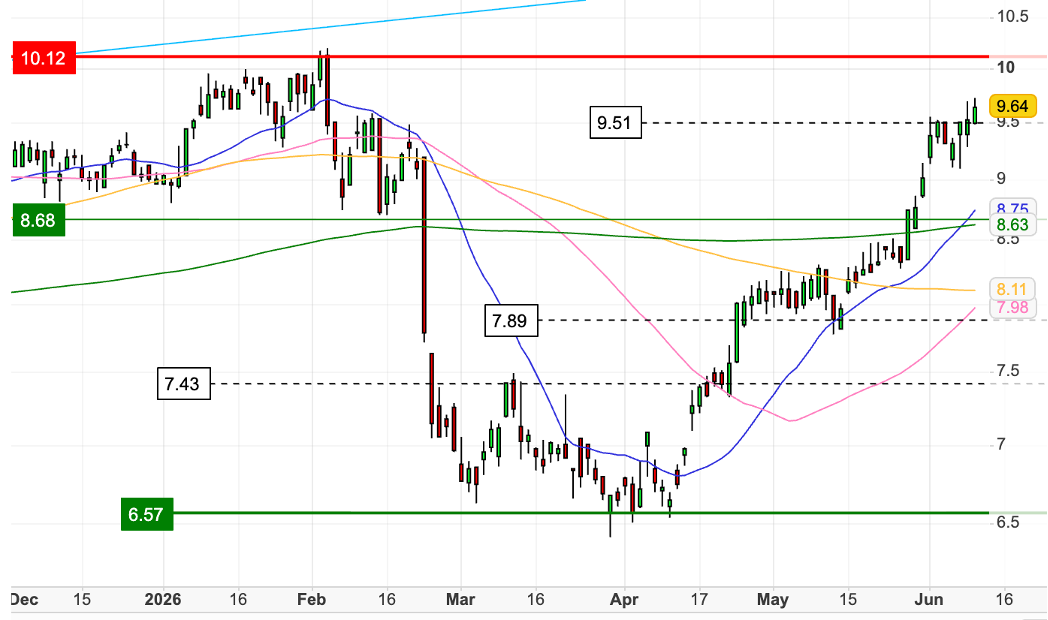
Data#3 (ASX: DTL) has built a strong reputation as one of Australia's leading enterprise technology solutions providers. The company delivers a broad range of services including software licensing, cloud solutions, cyber security, managed services and technology consulting.
Rather than developing its own software products, Data#3 focuses on helping organisations implement and optimise technology solutions from major global vendors. This strategy has enabled the company to establish long-term relationships with government agencies, educational institutions and large enterprises across Australia.
As technology environments become increasingly complex, organisations are increasingly seeking trusted partners capable of guiding digital transformation initiatives.
Several powerful industry trends continue to support demand for the company's services. Cyber security remains a major priority as businesses face increasingly sophisticated threats and stricter regulatory requirements.
At the same time, cloud migration continues across both public and private sectors as organisations seek greater scalability and operational efficiency. More recently, the emergence of artificial intelligence has created new opportunities for advisory, implementation and infrastructure-related services.
Many organisations are still in the early stages of AI adoption and require assistance in evaluating, deploying and securing these technologies. Data#3's established customer relationships and strong vendor partnerships position it well to benefit from this evolving landscape.
The Next Generation of Technology Winners
The AI revolution is still in its early innings. While share prices across the sector will inevitably experience periods of volatility, the underlying drivers supporting long-term growth remain firmly intact. Businesses continue to seek productivity gains, software adoption continues to expand, and AI is rapidly becoming embedded throughout the global economy.
For investors, the opportunity extends far beyond the handful of mega cap technology companies that dominate market headlines. Within the ASX small and mid-cap universe, there are businesses developing innovative products, serving expanding markets and building positions within some of the most attractive areas of the technology landscape.
Not every company will succeed, and careful stock selection remains critical. However, for investors willing to focus on quality businesses with scalable models, recurring revenue and genuine competitive advantages, the AI and SaaS theme continues to offer one of the most compelling long-term growth opportunities available today.
Get the wire before the market opens.
The ASX small-cap stories that matter, filed before 9am AEST. Curated by the Small Caps desk.