

- 01PPS: durable pain relief to 26 weeks
- 02Gait improved; symmetry near normal at 8-26 wks
- 03MRI: cartilage stabilised; minor gains
- 04Canine OA model mirrors human OA
Paradigm Biopharmaceuticals (ASX: PAR) has published peer-reviewed results in leading scientific journal* PLOS One *demonstrating sustained pain reduction, functional improvement, and structural joint benefits from pentosan polysulfate sodium (PPS) in naturally occurring canine osteoarthritis.
The publication reports durable effects through 26 weeks following a six-week treatment course, with outcomes spanning clinical pain scores, objective gait analysis, magnetic resonance imaging, and serum biomarkers.
The findings provide translational validation in a disease model that closely mirrors human osteoarthritis, offering a compressed analogue of longer-term human outcomes.
The study adds to Paradigm’s growing body of evidence supporting the disease-modifying potential of injectable pentosan polysulfate sodium as the company advances its late-stage development program.
Study Design and Key Outcomes
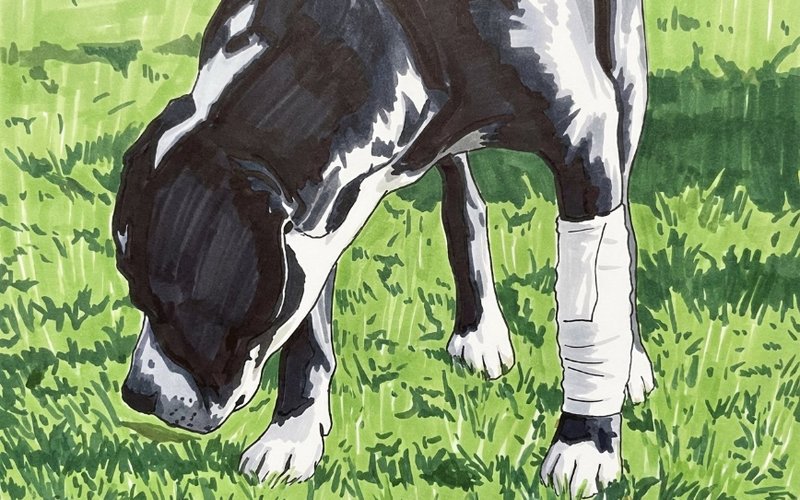
Paradigm Biopharmaceuticals supported a randomised, placebo-controlled translational study in companion dogs with radiographically confirmed, naturally occurring osteoarthritis affecting the stifle and or elbow joints.
Dogs received weekly subcutaneous dosing of PPS for six weeks, with follow-up assessments conducted through week 26.
After adjustment for higher baseline pain in the treatment group, PPS-treated dogs demonstrated sustained reductions in Helsinki Chronic Pain Index scores to six months, while placebo-treated dogs showed worsening pain.
Objective gait analysis showed progressive normalisation of gait symmetry at weeks eight and 26, consistent with improved weight-bearing and reduced lameness.
Structural and Biomarker Evidence
Quantitative magnetic resonance imaging demonstrated stabilisation and modest increases in total cartilage volume in PPS-treated dogs at weeks eight and 26 relative to baseline.
In contrast, placebo-treated dogs continued to show cartilage volume loss over the same period, supporting a potential structural disease-modifying effect.
Serum biomarkers showed reduced bone resorption, with CTX-I levels declining and a statistically significant treatment effect observed at week 26.
Additional biomarker changes included reductions in hyaluronic acid and increases in TIMP-1, collectively consistent with slowed cartilage degradation and altered joint tissue turnover.
Translational Relevance to Humans
The study evaluated PPS in spontaneously developing osteoarthritis rather than induced laboratory models, closely reflecting the biological and mechanical drivers of human disease.
Because osteoarthritis progresses more rapidly in dogs, the 26-week follow-up is seen as broadly analogous to multiple years of disease progression in people.
Independent human studies have shown that similar biomarker and imaging changes predict longer-term disease outcomes, lending translational weight to the canine findings.
The results align with outcomes previously observed in Paradigm’s Phase 2 human studies, reinforcing cross-species consistency.
Strengthened Foundations
The newly published data strengthen the scientific and regulatory foundation supporting Paradigm’s ongoing Phase 3 injectable PPS program.
“This study is particularly important because it evaluates PPS in dogs with naturally occurring osteoarthritis, rather than in induced laboratory models,” lead author and Paradigm's translation research manager, Dr Catherine Stapledon, said.
“This provides a clinically relevant translational bridge to human disease—the six-month follow-up in this setting offers insight into longer-term biological and structural effects that would typically require several years to assess in people.”
Paradigm believes the combined canine and human datasets provide complementary evidence that PPS influences key pathways linked to inflammation, cartilage degradation, pain signalling, and joint remodelling.
Get the wire before the market opens.
The ASX small-cap stories that matter, filed before 9am AEST. Curated by the Small Caps desk.