
Bad policies have a habit of being exposed and ditched but it was still a surprise to see the Andrews Government’s latest attempt at a Robin Hood tax last just five days before it was ditched.
The 1.75% tax on the value of virtually all new apartment and multiple dwelling developments was a really bad idea for many reasons, including:
- it hits the poor and middle classes trying to get a foot on the property ownership ladder the hardest by jacking up prices for the most affordable homes;
- it is a central job of the Victorian Government to provide social housing, so linking 1,700 social homes to a new tax is a regressive move;
- developers will categorically not pay the tax – they will simply build it into the price of new homes, thereby reducing home affordability;
- targeting just four “towns” with a tax – Melbourne, Geelong, Bendigo and Ballarat – is bizarre, unfair and lazy;
- this is yet another example of a poorly designed, narrow and punitive tax being foisted on the property market at a time when it can least afford it;
- the cost of this tax gets built into housing loans, causing a compounding effect that will last for decades;
- the Victorian Government also “decided” to stop paying rates on social housing, something that would increase rates for other residents and take away the incentive for councils to support more social housing. It also diverts revenue from councils to the state government.
A backroom deal that went bad?
With so many bad points you might wonder how this grandly titled $800 million tax – the Social and Affordable Housing Contribution – ever made it off the drawing board, particularly in the run up to a state election on 26 November?
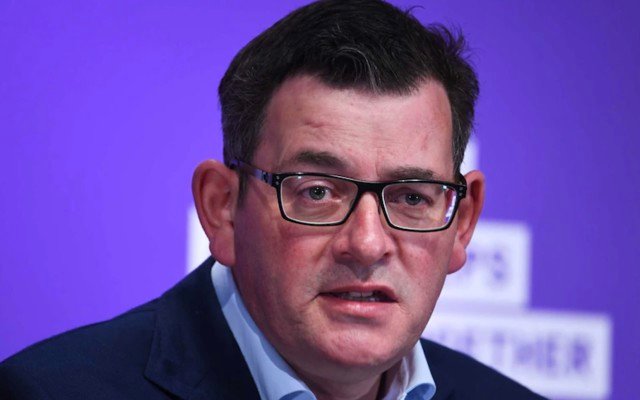
The answer was both illuminating and disturbing with Victorian Premier Daniel Andrews blaming sections of the property industry for welching on a deal to accept the tax in exchange for faster and more efficient building permits.
“We had an agreement,” he said in announcing the tax would be ditched.
“It seems that agreement was not going to be honoured. I am not in the business of creating super profits for developers if they are unwilling to support sharing those profits.”
Would building permits have been streamlined?
While the Property Council admits they were sounded out in secret briefings about the tax – while other housing industry groups were not – they deny having an agreement to support the tax in return for streamlined building permits.
The whole idea of such a backroom deal to help progress a new tax in itself seems very disturbing, although perhaps it is a more palatable explanation than the real one.
It seems unlikely this tax would have passed in the Legislative Council because of the number of independents that would be needed to support it, so ditching it fast and blaming someone else looks like an appealing option, although Premier Andrews seemed genuinely angry.
It also seems like madness to provide rising barriers to home ownership as a “vote for us” strategy for the State Election, particularly when you look at how similar issues on removing negative gearing and capital gains tax concessions backfired badly on Labor in the last Federal Election.
Home ownership is a hot button issue and running a scare campaign based on higher taxes that might add $20,000 or more to the cost of many new properties would have been a basic strategy for the Liberals in the looming election.
Will faster building permits now disappear?
Now that the tax has been ditched, perhaps that campaign could move on to why the planned “streamlined” building permits have not been delivered if they could have provided more homes, more quickly?
Still, there are other narrow and nasty taxes that could be targeted in the election, even if they don’t have the same electoral impact.
One might be the windfall gains tax, under which developers and property owners who make “windfall gains’’ when their property is rezoned will be hit with a startling 50% tax if the gain is worth $500,000 or more from July 2023.
Another Robin Hood tax that aims to steal from the rich and give to the poor is the mental health levy announced in last year’s Victorian state budget, which charges businesses with more than $10 million in wages a 0.5% payroll levy, rising to 1% for businesses with wages above $100 million.
That tax began at the start of 2022 and is set to raise more than $800 million over four years, with the money destined for mental health.
Taxing payrolls – effectively putting a further tax and disincentive on employment – has always been a regressive and poor form of taxation and linking further rises to improving mental health is a soft way of selling what is a terrible tax.
Consumers always pay for Robin Hood
In the long run it is consumers who pay this tax on higher prices for services and goods, and it also acts as a disincentive on employing Victorians versus workers interstate – the opposite signal than a state government should be sending.
Of course, all of these poorly designed and narrow taxes are particularly disappointing given that the introduction of the GST was meant to bring an end these sorts of taxes, which are the result of the very narrow tax base available to state governments.
However, there has been no sign of any appetite for further tax reform to rid us of these terrible taxes or to reduce Australia’s alarming over-reliance on income and company tax at the federal level.
