

- 01Archer pivots to scalable biochip.
- 02Biochip enables quantitative point-of-care potassium testing.
- 03US$30B hyperkalemia cost underpins biosensor value.
When evaluating deep-tech enterprises, it is essential to look beyond the underlying science—such as qubits, silicon integration, and tunneling magnetoresistance—and examine commercial viability.
The primary question for investors and industry analysts is: What tangible, large-scale problems does this technology solve?
A close analysis of Archer Materials’ (ASX: AXE) 1H FY26 update reveals a clear strategic pivot. The company is actively engineering solutions for severe bottlenecks across global healthcare, data security, and aerospace.
Here is an overview of why Archer’s technology matters on a macroeconomic scale.
The Biochip: Advancing beyond legacy lateral flow technology
Current medical diagnostic frameworks are highly centralised, creating immense inefficiencies within global healthcare systems.
While the market has seen attempts at decentralised rapid testing through legacy lateral flow technologies (such as standard rapid antigen or pregnancy tests), these traditional methods are severely limited. They generally offer basic qualitative results—a simple "yes" or "no"—but lack the quantitative precision, sensitivity, and multiplexing capabilities required to manage complex chronic diseases.
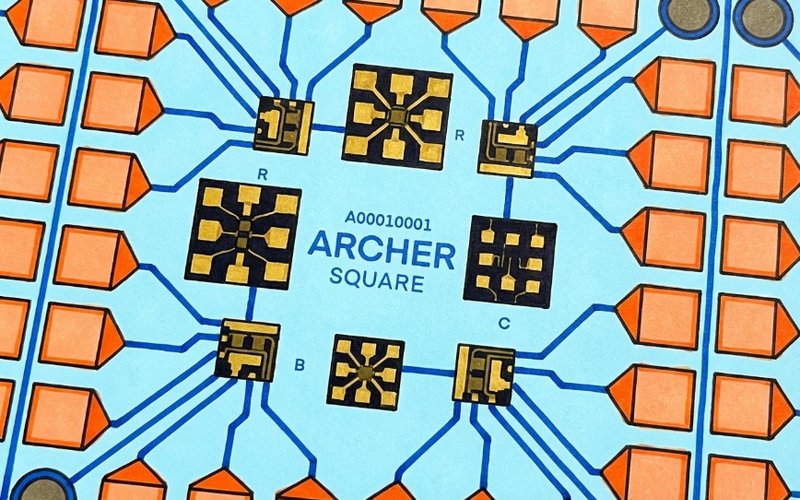
Archer’s silicon-integrated Biochip is engineered to bridge this exact gap, bringing the immense precision of advanced semiconductor manufacturing directly to the point of care. By successfully testing blood samples smaller than a single drop, Archer is establishing the foundation for rapid, clinical-grade quantitative testing in decentralised settings.
The initial commercial target for this technology platform is blood potassium monitoring for cardiovascular and kidney disease patients—conditions affecting roughly 850 million people globally.
Hyperkalemia—elevated potassium levels—can be life-threatening, and results from poor kidney function as well as medications taken to treat these diseases. Due to a lack of fast, cheap, and easy testing, clinicians are not able to provide the optimum treatments for managing kidney and / or cardiovascular disease.
This contributes to poor clinical outcomes and significant healthcare costs—further reinforcing the importance of this application. For example, the cost burden of hyperkalemia in the US alone is estimated at ~$30B, driven by somewhat avoidable, expensive hospital visits.
By replacing outdated lateral flow concepts with scalable silicon biosensors, the Biochip promises to lower systemic healthcare costs while providing patients with proactive, highly accurate health data.
Importantly, this platform has broader applicability beyond potassium testing, with potential to be extended across medical diagnostics, agtech, and environmental monitoring.
Quantum Technology: Securing the next era of infrastructure
Classical computing and sensing infrastructure are each rapidly approaching their physical limitations, precisely as global data processing and security demands escalate.
Archer’s dual-pronged quantum strategy—spanning hardware (computing and sensors) and software (Quantum Machine Learning)—targets industries that require unprecedented computational speed and precision, as well as enabling new extremely high-value industries.
- Cybersecurity: Cyber threats have grown increasingly sophisticated. Traditional security networks are struggling to identify complex anomalies in real time. Through its partnership with CSIRO, Archer is developing Quantum Machine Learning (QML) models, beginning with financial fraud detection. This QML architecture has the capacity to process vast datasets instantaneously. Ultimately, this creates immense optionality for next-generation cybersecurity. This use case forms a solid basis for developing similar software for other applications in areas like transportation optimisation and defence.
- Defence and Aerospace: In high-stakes environments, such as modern defence and space exploration, operational precision is non-negotiable. For example, GPS networks have inherent vulnerabilities, including susceptibility to jamming and signal degradation. Archer’s quantum sensing milestones—such as the cryogenic operation of TMR (Tunneling Magnetoresistance) and on-chip EDMR—represent a critical leap forward. These scalable quantum sensors can detect microscopic shifts in magnetic fields, enabling ultra-precise navigation, mapping, and operational awareness in extreme environments where conventional technology fails.
The Macroeconomic Takeaway
Archer Materials is strategically targeting industries currently constrained by legacy technology. By prioritising scalable architectures—ensuring its Biochips can be manufactured utilising standard semiconductor infrastructure rather than relying on outdated lateral flow methods—Archer is positioning itself as a foundational provider for the next era of medicine and computing.
Quantum computing has incredible potential to unlock massive markets and enable life-changing technologies. The innovation and engineering challenges ahead in this field are still significant.
Archer’s enabling technologies in computing, sensing, and software will play important roles in the realisation of scaled, useful quantum technologies and unlock the value.
Backed by validated global partnerships and a secure financial runway, Archer is actively developing the proprietary tools necessary to redefine global industrial operations.
Get the wire before the market opens.
The ASX small-cap stories that matter, filed before 9am AEST. Curated by the Small Caps desk.