

- 01WTM Spur Zone: >90% gold recovery in initial tests.
- 02Gravity avg 33.6%; cyanidation avg 60%.
- 03Coarse gold >100 micron seen; aligns with XRF.
Waratah Minerals (ASX: WTM) has reported high gold recoveries from initial geometallurgical testing of samples from the Spur Zone at its Spur project in New South Wales.
Diagnostic cyanide leaching and gravity recovery tests were performed on 10 kilogram samples of quarter core to validate findings from micro-X-ray fluorescence (micro-XRF) scanning and establish the deportment of fine grains that fall below the micro-XRF detection limit of 20 microns (µm).
Testing returned over 90% gold recovery, with values between 15% and 45% for gravity recovery alone (average 33.6%) and recovery by cyanidation being between 51% and 74% (average 60%).
Minor gold at an average 6% was found to be associated with sulphides and negligible gold (average 0.6%) was locked in silicates.
Coarse gold of over 100µm in size was observed in all four samples and found to be consistent with the micro-XRF scanning results from selected drill core.
Associated Mineralogy
Waratah scanned 18 representative diamond drill core samples at 100µm resolution and detected a total of 177 gold grains sized between 20µm and 688µm, mostly associated with quartz and chlorite in complex quartz-chlorite-calcite-pyrite-chalcopyrite veins.
Gold grains were then scanned at 20µm to generate quantitative data on grain size and associated mineralogy.
The company also completed a review of gravity concentrates using optical microscopy to gain an understanding of the upper size range of gravity recoverable gold.
Applying the techniques in tandem enabled a deeper understanding of the nature of the coarser (>20µm) gold grains while capturing the finer proportion of gold through diagnostic leaching on a larger bulk sample.
The results suggest a simple, conventional process pathway for Spur’s mined ore.
Early-Stage Insights
Managing director Peter Duerden said the team had gained important early-stage insights into the deportment, grain size, and recovery of Spur Zone mineralisation to support future metallurgical assumptions.
“This initial test work from the Spur Zone points strongly to a conventional recovery process for gold and reinforces the quality and nature of the Spur project,” he said.
“Additional gold deportment work is underway for the nearby Consols Zone, which will contribute to the development of a 3D geometallurgical model that we will use to develop a larger-scale metallurgical program.”
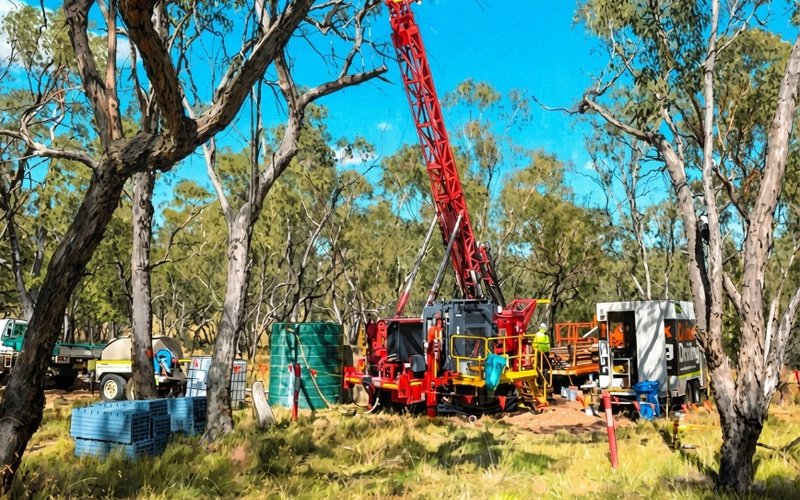
Mr Duerden said an 80,000m growth and discovery drilling campaign was continuing at Spur with seven rigs currently on-site.
Get the wire before the market opens.
The ASX small-cap stories that matter, filed before 9am AEST. Curated by the Small Caps desk.