

- 01July: MREO 78.8%, TREO 64% - above PFS 76%/57%.
- 0224h continuous run; MREO >80%.
- 03DFS/financial model due Aug 2026; Solvay samples shipped.
Viridis Mining and Minerals (ASX: VMM) has achieved steady-state continuous production of Mixed Rare Earth Carbonate (MREC) at its Colossus project demonstration plant following the facility’s initial start-up in May 2026.
Average July recoveries reached 78.8% for magnetic rare earth oxides (MREO) and 64% for total rare earth oxides (TREO), exceeding the respective 76% and 57% assumptions used in the pre-feasibility study (PFS).
Individual MREO results surpassed 80% as the plant operated reliably on a continuous 24-hour automated basis using run-of-mine (ROM) feed representative of the Northern Concessions that underpin the project’s early production years.
The results will inform the definitive feasibility study (DFS) and financial model due for completion in August 2026, while product qualification is advancing after high-grade MREC samples were shipped to strategic offtake partner Solvay’s La Rochelle facility in France.
Continuous Plant Performance
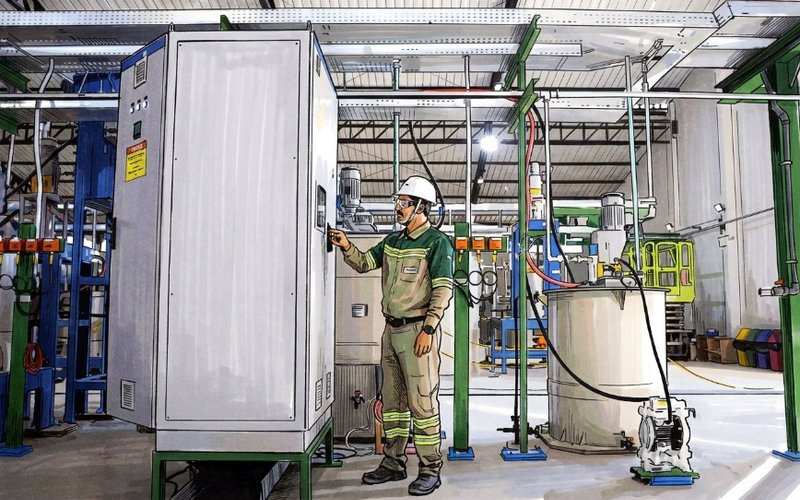
The demonstration plant replicates the proposed commercial flowsheet at a design capacity of 100 kilograms per hour of clay feed, supported by automated process controls and integrated water, with reagent recycling and an on-site laboratory used to refine feed blends and operating parameters.
July MREO recovery results ranged from 74.4% to 80.9%, with a median of 80.3%, while TREO recoveries ranged from 55.2% to 68.9% and recorded a median of 65.1%.
The PFS recovery assumptions were based on extensive test work conducted by the Australian Nuclear Science and Technology Organisation, giving Viridis a defined benchmark against which to measure continuous plant performance.
ROM feed has been sourced from the CW-01 and CW-02 pits, which are expected to provide the first 18 to 24 months of commercial plant feedstock and allow representative recovery factors to be carried into the DFS.
The two feed sources recorded TREO grades of 2,794 parts per million (ppm) and 2,933ppm respectively, with MREO grades of 803ppm and 802ppm, compared with PFS life-of-mine (LOM) averages of 3,380ppm TREO and 936ppm MREO.
Exceeding Company Expectations
Managing director Rafael Moreno said the demonstration plant continued to exceed the company’s expectations and marked another important milestone in the project’s development.
“Successfully operating under continuous 24-hour automated conditions is a significant achievement in itself, however the most vital outcome is that we are consistently achieving metallurgical recoveries above those assumed in our PFS,” he said.
“Every percentage point improvement in recovery translates directly into higher rare earth production from the same ore feed, creating the potential for meaningful improvements in project economics as we progress towards the DFS.”
Viridis considers the successful steady-state recoveries achieved from feed grades on the lower side of the LOM range to provide additional conservatism for financial modelling, while the plant’s operating data is helping finalise process design criteria and capital and operating cost decisions.
“With financing, permitting, commercial negotiations, and DFS activities all progressing in parallel, these operating results further strengthen our confidence as we advance towards a Final Investment Decision in the coming months."
Get the wire before the market opens.
The ASX small-cap stories that matter, filed before 9am AEST. Curated by the Small Caps desk.