
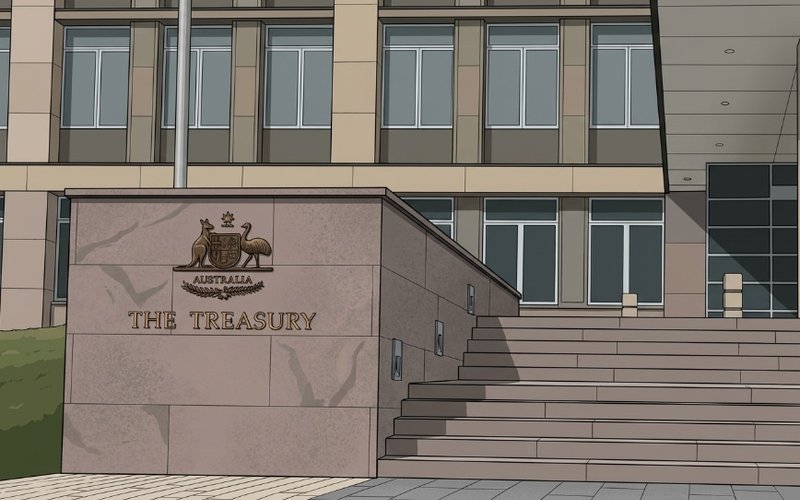

- 01Chalmers: Keating admirer, but tax reform feels chaotic.
- 02Hawke/Keating reforms were debated; this package surprised.
- 03Anomalies and errors mark the details.
One of Treasurer Jim Chalmers’ claims to fame is that he closely studied former Labor Treasurer Paul Keating and is a great admirer of the man.
Indeed, he was awarded his doctorate in political science for writing a thesis on Paul Keating, titled Brawler statesman: Paul Keating and prime ministerial leadership in Australia.
Which makes it all the more baffling that when it came to introducing a major tax package, he has chosen a method that could not be further removed from the even bigger tax reform that Keating introduced.
Hawke-Keating Plan
The major difference is that by the time the Hawke-Keating tax reform package was introduced, there were very few interested people who were not across the major details of the plan.
We didn’t get the proposed broad-based consumption tax which was part of Keating’s much promoted “option C” – which had to wait until John Howard introduced the GST – but we did get a major reform to the tax system.
This included a new capital gains tax, a fringe benefits tax, a foreign tax credit system, a dividend imputation system, and lower income tax rates.
While it involved a lot of major changes, they had generally been discussed and debated at great length and examined by tax experts of all types.
While it would be wrong to say the changes were not controversial – they were strongly opposed by many groups – they were at least well understood and despite being seen as quite radical at the time, their introduction was relatively smooth.
Many Changes a Surprise
The contrast with the Chalmers tax package introduced at the 2027 budget could not be more stark.
While some of the details of the Chalmers package had been discussed earlier – notably the changes to the taxation of trusts and the potential end of negative gearing for houses and the 50% discount for capital gains on houses – other parts of the reform package seemed to come from nowhere.
The broader changes to the way capital gains tax would be applied to other assets were a big surprise.
What’s more, as tax experts ran their eyes over the details of these changes, the number of anomalies and straight out errors kept rising as well.
Certainty at a Premium
The Chalmers approach to these has been one of grudgingly accepting a raft of different changes that seemed to have been applied on the principle of groups that made the loudest noise got the most concessions.
The problem with this approach to tax reform is that it breaks down certainty and stability within the community as reforms are announced but then progressively amended over time, sometimes with promises that regulations will make it clear down the line.
In one sense the fact that the majority of the changes don’t take full effect until July 1 in the new financial year has allowed for the continuing evolution of the tax package but, given that many people are making changes to their tax affairs in preparation for the changes, such a movable feast is far from ideal.
Indeed, the Australian Chamber of Commerce and Industry said the constant tweaking did not alter the overall impact of Labor’s tax package on businesses and that the revised reforms remains harmful and sap confidence across the economy.
Fast-Growing Businesses
They were commenting on the latest change to Labor’s new inflation-adjusted model for taxing capital gains which it is feared could hurt fast-growing new businesses and worsen Australia’s productivity and investment.
Under the changes, companies operating for up to 15 years will be able to qualify for a CGT concession, up from 10 years, while investors will need to hold eligible shares for three years, down from five.
The concession will also no longer be capped and a research and development refund scheme for biotech firms will be accessible for 15 years, up from 10.
This change follows on from several others:
- A tax on testamentary trusts that was dropped after the Coalition described it as a “death tax” in a scare campaign.
- A tax loophole disadvantaging widowed investors was closed after an agreement between the major parties to support slashed funding for the NDIS.
- The original Budget night tax reforms grandfathered negative gearing and capital gains tax concessions for investors who held property prior to May 12, but if their marriage broke down or their spouse died, they would have lost the entitlements when a jointly owned property transferred to their name.
- Changes to the taxation of family trusts allows for an exemption from the minimum 30% tax if the trust makes a fixed distribution to nominated beneficiaries. This enabled trusts to avoid a restructuring which would have incurred state stamp duties.
None of the changes are bad and in one sense the changes show that the Government is listening to genuine complaints about its tax changes.
However, a lot of these constant fiddles and piecemeal changes could have been avoided with the more consultative and nuanced approach to tax reform.
Get the wire before the market opens.
The ASX small-cap stories that matter, filed before 9am AEST. Curated by the Small Caps desk.