

- 01Five IML applications filed for Mannar project
- 02Area 69 sq km; 318 Mt at 4.17% THM
- 03Stage 1: 82 Mt at 6.03% THM
- 04Policy pending; GSMB assess after approval
Titanium Sands (ASX: TSL) has submitted five industrial mining licence applications (IML) for the future development of its Mannar heavy minerals project in northwest Sri Lanka.
The applications cover an area of 69 square kilometres and incorporate the project’s existing mineral resource estimate of 318 million tonnes grading 4.17% total heavy minerals (THM), with a Stage 1 high-grade zone of 82Mt at 6.03% THM.
Moving towards production
Managing director Dr James Searle said the submission of the IML applications was an important step in progressing Mannar toward production.
“These applications mark an important milestone for our company,” he said.
“They provide positive momentum towards the start of supportive and environment-friendly mining activities that will benefit all stakeholders by attracting investment to the region and providing new jobs and economic assistance to the local community.”
New mineral policy
Sri Lanka’s Geological Survey and Mines Bureau (GSMB) has confirmed that the IML applications will be assessed once a new national mineral policy has been approved by the Ministry of Industry and Entrepreneurship Development.
The new policy seeks to maximise the economic potential of mineral resources while adhering to sustainable development and environmental management practices.
It aims to boost foreign exchange by 2029 through investment in value-added processing for graphite, quartz and heavy mineral sands.
Significant deposit
Mannar is an ilmenite feedstock project (with minor credits from other mineral components) and is ranked as one of Sri Lanka’s most significant deposits.
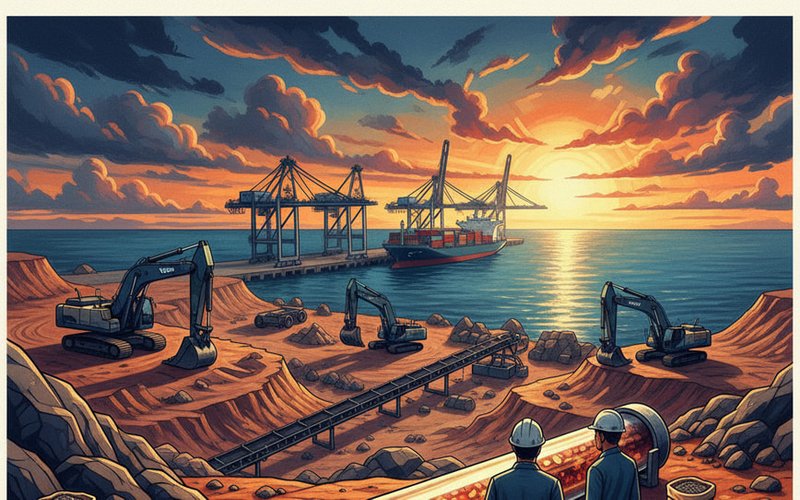
The high-quality product is expected to find a ready market with titanium slag and sulphate route pigment producers in the Middle East, Korea, India and China while mined heavy mineral sands will be exported to offtake partners from existing shipping ports at Colombo and Trincomalee.
Titanium Sands has appointed a consultant to complete Mannar’s environmental impact assessment, which was paused in November during Cyclone Ditwah, widely considered to be the worst extreme weather event to hit the nation in decades.
Get the wire before the market opens.
The ASX small-cap stories that matter, filed before 9am AEST. Curated by the Small Caps desk.