
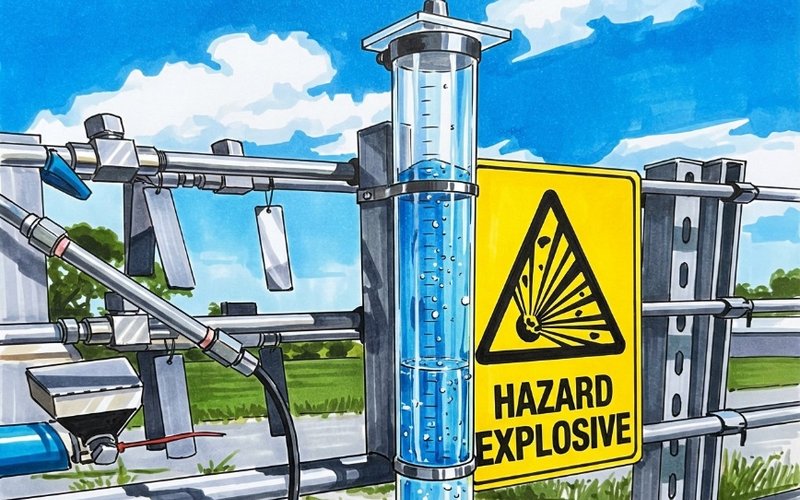

Sparc Technologies (ASX: SPN) has achieved sustained hydrogen generation at its first-of-its-kind green hydrogen pilot plant in Roseworthy, South Australia.
The milestone marks completion of commissioning and the transition to full operational testing under concentrated solar conditions.
Managing director Nick O’Loughlin said the achievement “positions Sparc Hydrogen at the global forefront of this emerging direct solar-to-hydrogen technology,” offering a potential pathway to low-cost green hydrogen production in a market forecast to be worth US$1.4 trillion annually by 2050.
Sparc Hydrogen JV
Sparc Hydrogen is a joint venture partnership between Sparc, the University of Adelaide, and Flinders University under a structure designed to translate academic research into commercial renewable-energy solutions.
The JV was established to develop photocatalytic water splitting, a process that produces green hydrogen directly from sunlight and water using specially engineered photocatalyst materials supplied through the University of Adelaide’s research collaboration with Shinshu University in Japan.
Sunlight is the plant’s sole energy input, delivering emissions-free hydrogen and industrial heat while using commercially available, scalable concentrated solar equipment.
Sparc believes the technology offers advantages over electrolysis in off-grid and remote locations, and may also provide significant flexibility for industrial end-use applications.
Pilot Plant Testing at Scale
The Roseworthy pilot plant is able to test the photocatalytic reactor design at scale, enabling the research team to validate laboratory results under real-world environmental conditions.
The facility uses concentrated solar equipment to assess hydrogen generation across a wide range of solar intensities, temperatures and pressures, providing the data required to benchmark reactor performance.
Sparc Hydrogen’s approach differs from conventional green hydrogen production by eliminating the need for electrolysers, power electronics, solar farms, or grid connections.
The partnership is advancing the technology from readiness level five toward levels six and seven, with the pilot plant representing a critical validation platform for its commercial development.
Mission-Profile Conditions
Operational testing at Roseworthy will continue through 2026 with an expanded suite of photocatalysts and reactor variants evaluated under mission-profile conditions.
The program will assess a variety of long-term endurance, cost, scalability, and performance benchmarks essential for future commercial deployment.
Sparc said the pilot plant will also support engagement with partners, funding agencies and photocatalyst developers as it strengthens its first-mover position in direct solar-to-hydrogen production.
“I congratulate the project team and our partners […] on this significant achievement, and look forward to showcasing the pilot plant as an example of the simplicity and scalability of Sparc Hydrogen’s reactor technology and how it can potentially unlock low-cost green hydrogen,” Mr O’Loughlin said.
Get the wire before the market opens.
The ASX small-cap stories that matter, filed before 9am AEST. Curated by the Small Caps desk.