

- 01Hydrogen found in all 28 samples.
- 02CSIRO flagged potential sources and pathways.
- 03Past movement only; guides 2027 drilling, not proof of commercial gas.
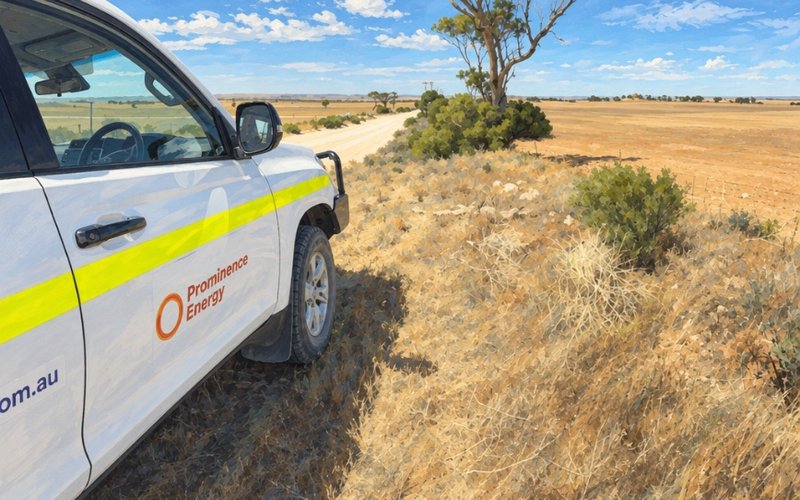
Prominence Energy (ASX: PRM) has reported hydrogen in all 28 rock samples successfully analysed in an independent study of its Eyre Peninsula natural hydrogen project in South Australia.
The CSIRO investigation identified two potential hydrogen-generation mechanisms and geological characteristics that could help narrow the company’s exploration priorities.
Its findings point to possible source rocks, migration structures, and a potential sealing formation, providing additional inputs for selecting locations for a proposed drilling campaign in mid-2027.
However, the results indicate past movement of hydrogen-bearing fluids rather than establishing present-day generation, a subsurface accumulation, or commercially recoverable gas.
Two Possible Hydrogen Sources
One potential source involves radiolysis of water associated with uranium- and thorium-enriched felsic rocks of the Hiltaba Suite, particularly the Cultana Subsuite.
Cultana samples contained uranium concentrations reaching 50.9 parts per million and thorium concentrations of up to 142.5ppm, which CSIRO considered favourable source-rock characteristics.
A second mechanism involves reactions between water and reduced iron in rocks including Sleaford Complex chlorite schist, Tunkillia dolerites and Hiltaba-associated metagabbros.
The Sleaford schist contained 8.39% reduced iron by weight, although any hydrogen generation would depend on suitable conditions and water access.
Neither mechanism has been demonstrated to be producing hydrogen at a measurable rate today, leaving the timing and extent of generation unresolved.
Earlier Fluid Movement
CSIRO released gases trapped in microscopic fluid inclusions by crushing the rock samples, detecting hydrogen in every one of the 28 successfully tested specimens.
The largest measured concentration, 7.72 millimoles per kilogram of rock, came from a quartz vein within the Tunkillia Suite.
The distribution of detections across different basement rocks is consistent with historical circulation of hydrogen-bearing fluids, while faults and fractures could have provided migration pathways.
Some higher readings occurred near intersections of major geological structures, while preliminary testing of one Gawler Range Volcanics rhyolite sample found very low gas permeability, but its limited coverage cannot demonstrate a continuous or effective regional seal.
Drilling to Refine Prospects
Prominence will combine source-rock characteristics, structural interpretations, and possible trapping configurations to refine prospects within petroleum exploration licence (PEL) 803.
Further work under consideration includes assessing potential hydrogen-producing rocks, testing the extent of volcanic cover and sampling deeper fluids to distinguish historical activity from present conditions.
“These results represent a major step forward in progressing the Eyre Peninsula exploration,” chief operating officer Dr Krista Davies said.
“The Prominence team can now focus on interpreting the findings to further inform our exploration targets, accelerating our progress towards drilling and the potential for a discovery that could deliver substantial value for it’s shareholders.”
Detailed drilling design is planned for November and December, with a multi-well helium and natural hydrogen program targeted for mid-2027 subject to technical results, approvals, and funding.
Get the wire before the market opens.
The ASX small-cap stories that matter, filed before 9am AEST. Curated by the Small Caps desk.