

- 01Mayo Clinic study: InVue/InForm for head/neck cancer; 35 pts.
- 02InVue real-time imaging of margins; AK-FLUOR 10%.
- 03InForm pathology; acridine orange; FDA filing.
Optiscan Imaging (ASX: OIL) has initiated a new US imaging study for head and neck cancer patients as part of its ongoing research and clinical collaboration with Mayo Clinic in Minnesota.
The 35-patient study will test the effectiveness of Optiscan’s InVue and InForm imaging devices in evaluating head and neck cancer surgical margins during tumour resection procedures, a key step in the company’s efforts to expand the addressable market for its platforms.
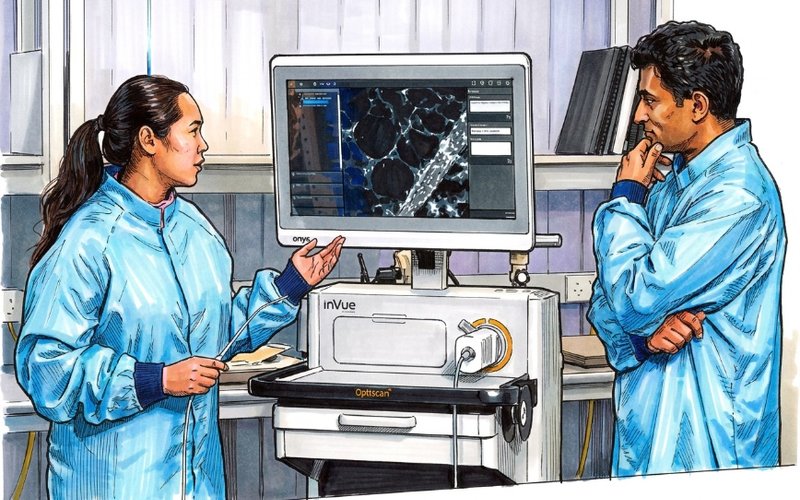
It will focus on the use of the InVue precision surgery imaging platform and InForm digital pathology imaging platform to provide high-resolution imaging in real-time, during, and after head and neck cancer surgeries.
Optiscan expects the findings to contribute to a clinical evidence package supporting the company’s planned submissions to the US Food and Drug Administration for both devices.
Real-Time Surgery Imaging
As part of the study, InVue will be used during head and neck tumour resections to capture real-time in vivomicroscopic images within the surgical cavity following tumour removal.
The use of intravenous fluorescein sodium AK-FLUOR 10% contrast agent — to be supplied by US-based Long Grove Pharmaceuticals as part of a June 2025 collaboration agreement — will enable researchers to evaluate tissue visualisation characteristics and potentially distinguish cancerous tissue from surrounding healthy structures.
Following excision, tissue specimens will be analysed ex vivo using InForm, with topical dye acridine orange applied to facilitate digital pathology imaging.
This component of the study will assess the integration of InForm within pathology workflows while generating complementary imaging data alongside intraoperative findings obtained with InVue.
By potentially demonstrating the complementary value of both devices within a single workflow, Optiscan could build a foundation for future opportunities across medical devices, digital pathology, software, and AI-enabled clinical applications, with potential expansion into additional cancer types and surgical procedures.
Surgical Setting Support
Optiscan chief executive officer Dr Camile Farah said the study was a valuable opportunity for InVue and InForm to be evaluated in surgical settings where achieving complete tumour removal is critical.
“Despite advances in the treatment of head and neck cancers, their recurrence remains a major challenge for many patients suffering these diseases,” she said.
“Through this study, we are seeking to better understand how real-time imaging can support surgical decision making.”
“We look forward to delivering valuable insights into how our technology performs in different surgical environments and as a package, these findings could help in our efforts to identify future clinical and commercial opportunities for our innovative platforms.”
Common Cancer Types
Head and neck cancer represents the world’s seventh most common cancer, with approximately 890,000 new cases diagnosed and 450,000 deaths recorded globally each year.
The disease—which encompasses a range of tumour types affecting the oral cavity, pharynx, and larynx—often requires complex surgical intervention as part of treatment.
Despite advances in care, clinical outcomes remain heavily dependent on a surgeon’s ability to completely remove cancerous tissue while preserving critical anatomical structures responsible for speech, swallowing, and breathing.
These procedures are compounded by high rates of recurrence, driving demand for technologies that can offer improved real-time visualisation of tumour margins and residual disease during surgery with the goal of improving surgical precision.
“Head and neck cancer represents a significant area of unmet need, and we believe technologies that help surgeons visualise tissue in real time could have the potential to make a meaningful difference for clinicians and patients,” Dr Farah said.
Get the wire before the market opens.
The ASX small-cap stories that matter, filed before 9am AEST. Curated by the Small Caps desk.