
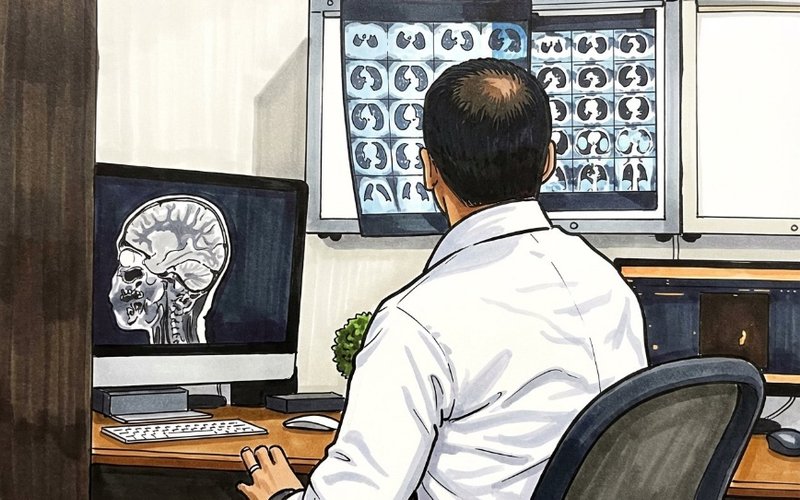

Optiscan Imaging (ASX: OIL) has partnered with Australian Clinical Labs (ACL) to launch the nation’s first-in-human head and neck cancer imaging study utilising the InVue and InForm digital pathology devices.
The ground-breaking study will recruit 50 patients at St John of God Healthcare campus in Murdoch and will be led by prominent Perth head and neck cancer surgeon Dr Chady Sader.
Data generated will support Optiscan’s regulatory submissions to the US Food and Drug Administration and advance its oral cancer artificial intelligence (AI) imaging algorithm.
Real-Time Imaging Capabilities
The program will evaluate the clinical performance and real-time imaging capabilities of Optiscan’s ++InVue++ technology, which has been designed to deliver high-resolution subcellular imaging of any soft tissue during surgery for oral, oropharyngeal, and associated squamous cell carcinomas of the head and neck region.
The device – which is tissue and cancer-agnostic – allows surgeons to observe detailed images of tissue structures at microscopic level, enabling more precise real-time diagnosis and treatment.
InVue will also be used to assess the uptake of the contrast agent fluorescein sodium, as well as the dynamics of imaging normal and cancerous tissues, with pathology specimens to be processed at ACL utilising the InForm device to examine fresh and fixed tissues.
“This clinical study represents an important step toward advancing surgical tools and expanding our understanding of how cancer can be detected and treated more effectively,” principal investigator Dr Chady Sader said.
“I’m optimistic that the findings will contribute to better outcomes for patients in the future.”
Non-Interventional Study
Optiscan managing director Dr Camile Farah said the non-interventional study means that vital imaging data can be gathered without disrupting standard of care protocols.
“The significance of this study cannot be understated, from the perspective of potential enhancements to treatments for patients suffering head and neck cancers as well as the development and commercialisation plans for our medical technology platform,” she said.
“We expect it to demonstrate that our technology bridges the gap between traditional histopathology and immediate clinical decision-making, opening the way for surgeons to better assess tissue, determine completeness of resection and clearance of surgical margins, and refine surgical approaches in real time.”
“This represents a paradigm shift in head and neck oncology, offering patients and clinicians a safer, more efficient pathway to future diagnosis and treatment.”
Complex Group of Cancers
Head and neck cancers are very complex in nature—encompassing cancers of the mouth and oropharynx, including the lips, tongue, cheeks, floor of the mouth, hard palate, sinuses, and throat.
Oral cancer is the most common of these, with an estimated 389,846 new cases reported worldwide in 2022 and the survival rate heavily influenced by the stage at diagnosis and success of surgical removal with clear margins.
Optiscan expects its InVue and InForm devices to enhance the future treatment of these cancers by providing surgeons with detailed microscopic insights of cellular and tissue level structures.
This will enable them to assess and monitor the presence and clearance of cancer across diverse and challenging anatomies.
Get the wire before the market opens.
The ASX small-cap stories that matter, filed before 9am AEST. Curated by the Small Caps desk.