
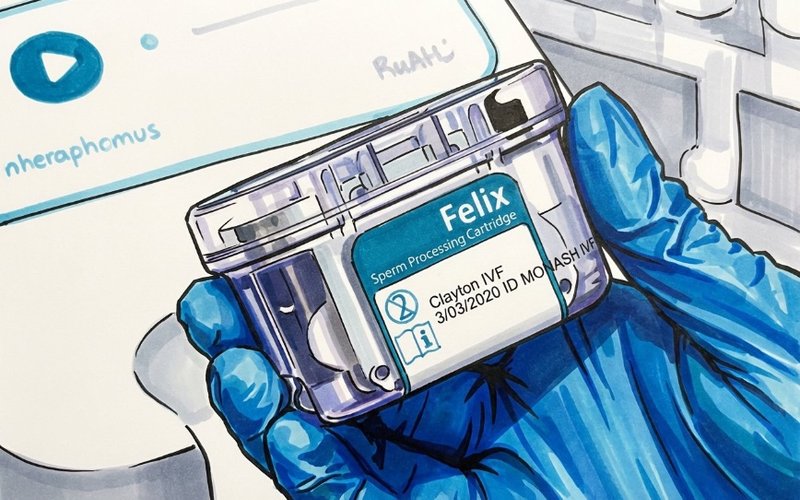

- 01TGA approves Felix; Australia sale starts.
- 02Early approval de-risks near-term path.
- 03Australia ~60k IVF cycles annually.
Memphasys (ASX: MEM) has confirmed that its patented Felix sperm separation device for human-assisted reproduction has received approval from the Australian Therapeutic Goods Administration (TGA) and been included on the Australian Register of Therapeutic Goods.
The approval, which was granted two months ahead of expectations, enables immediate commercial sale and clinical deployment of the product across Australia.
Early approval materially de-risks Felix’s near-term commercial pathway, positioning Memphasys to market and sell Felix in Australia, deploy Felix consoles into in vitro fertilisation (IVF) laboratories, supply Felix cartridges on a recurring per-procedure basis, and transition from pre-commercial readiness into active market deployment.
The TGA approval follows the award of CE Mark registration in Europe and complements ongoing regulatory and commercial progress across other jurisdictions including markets where Felix has already been compliant and in use.
Enhancing Sperm Quality
By combining electrophoresis and size-exclusion membranes, the Felix system delivers a fast, gentle and standardised sperm selection process that enhances sperm quality and reduces laboratory time.
It has been designed to replace traditional centrifugation, which can cause cellular stress and DNA damage, and offers clinicians a superior, repeatable alternative.
Australia represents a strategically important initial market for Felix, with more than 60,000 fresh IVF cycles performed annually where the product has a direct clinical application.
Memphasys chair Lindley Edwards said the company had gained much confidence from the expedited approval.
“Securing TGA approval two months ahead of our stated timeline is a strong validation of the quality of our technology, the robustness of our regulatory strategy and the discipline of our execution,” she said.
“It allows us to accelerate our commercial activity in Australia, bringing forward engagement with IVF clinics and converting advanced discussions into revenue-generating outcomes sooner than anticipated.”
Get the wire before the market opens.
The ASX small-cap stories that matter, filed before 9am AEST. Curated by the Small Caps desk.