
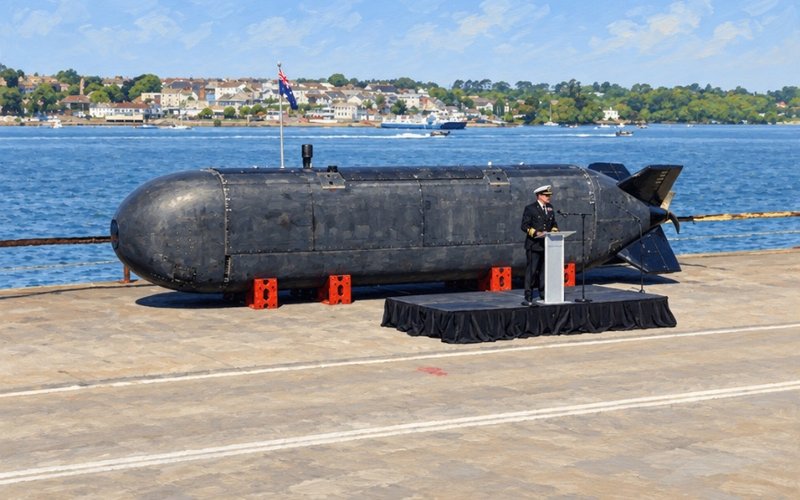

- 01Cells passed 1,000m tests undamaged; voltage stayed stable.
- 02~2x lithium-ion energy density may aid UUV endurance.
- 03Deeper tests and open-water trial planned.
Li-S Energy (ASX: LIS) has completed first phase pressure testing of its lithium-sulphur cells equivalent to a depth of 1,000 metres under a collaboration with British undersea systems specialist MSubs.
Testing aimed to evaluate the cells’ suitability to power large unmanned underwater vehicle (UUV) applications by exposing them to pressure profiles representative of real world operating conditions.
No mechanical damage, swelling, leakage, or mass loss was observed in the work conducted in an MSubs pressure vessel commissioned at Li-S Energy’s battery testing centre in Geelong, with cell voltage remaining stable throughout testing and 24 hours afterwards.
Pressure tolerance, low weight, and near-neutral buoyancy are seen as attractive features in a battery system designed for high-endurance UUV propulsion.
Challenging Environment
Li-S chief technology officer Dr Steve Rowlands said the company was proud of the positive results delivered from the first phase tests.
“The pressure at 1,000m is one of the hardest environments you can ask a battery cell to work in and our cells did not just survive it, they kept delivering propulsion current through repeated dives and came back to the ‘surface’ undamaged, with no change in mass and a textbook recovery to open-circuit voltage,” he said.
“That removes a key risk for using our cells in water-filled UUVs at ambient pressure, and reiterates to us that the cell design is fundamentally right for this application.”
Next steps will include pressure vessel testing and charging at greater depths, along with investigating thermal operating profiles, followed by a trial battery pack on an UUV dive mission in open water.
MSubs Collaboration
Li-S Energy partnered with MSubs in December 2025 to evaluate its lithium-sulphur technology for large-scale propulsion battery systems in extra-large UUV platforms, initially involving high pressure and mission-profile endurance cell testing simulating multi-day deployments at submarine operating depths.
The agreement represents an important strategic step as Li-S expands into the demanding undersea systems sector, which places extreme emphasis on energy efficiency, reliability, and buoyancy balance.
The latest test results unlock the key advantages of the company’s cells for UUVs—they are around twice the energy density of lithium-ion batteries, offering lower weight and near-neutral buoyancy without the need for heavy pressure containment or extensive buoyancy foam in the design.
Dr Rowlands said the buoyancy advantage had the potential to transform unmanned underwater platform design by reducing overall vehicle mass, extending endurance, and increasing payload capacity.
Get the wire before the market opens.
The ASX small-cap stories that matter, filed before 9am AEST. Curated by the Small Caps desk.