

- 01Breakthroughs in battery tech, synthetics, and space-grade applications.
- 02International validation proving the technological capabilities.
- 03How to get exposure through innovative ASX listed companies
Graphene, an advanced material with so much promise has had its moments of spotlight in the past, but often failed to live up to its nickname, the “wonder material” in scalable commercial applications and technological transformation.
The recent explosion of AI, data centres, and progress in quantum computing has had capital move towards innovative technologies.
Graphene remains as one of those promising innovations with massive potential.
What Is Graphene, Exactly?
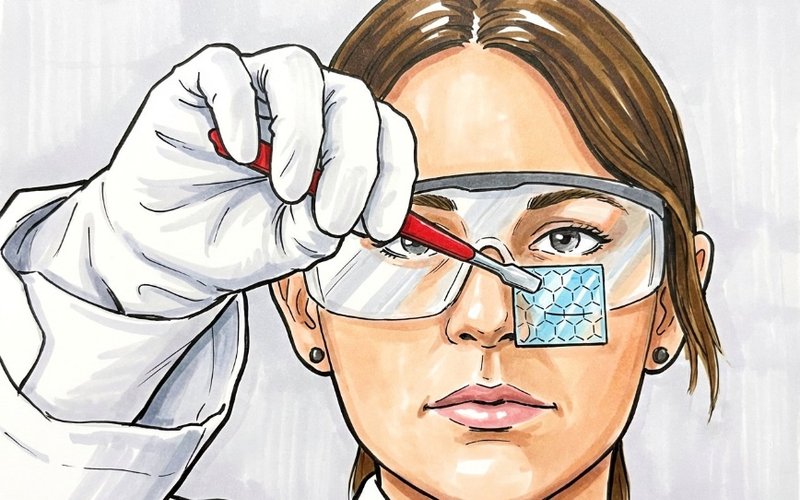
Technically, Graphene is a single layer of carbon atoms arranged in a honeycomb structure; not that interesting for the non-scientific readers.
However, this atomic make-up creates a strong, flexible, transparent and thermal / electrical conductor.
You can see where the “wonder material” label comes from.
What’s the Update on Graphene?
A recent retrospective from The Guardian, titled "Lab to fab," highlights that the tide has finally turned.
The industry is moving past the "valley of death"—where promising tech fails to scale—and into a new era of industrial adoption.
From data centres in Cambridge to manufacturing hubs in Canada, The Guardian state that graphene is no longer just a science experiment; it is enhancing concrete, revolutionizing batteries, and powering next-gen sensors.
Does this potential macro shift validate the strategies of select ASX-listed companies that have spent years refining their technology?
Are real world applications and commercialisation closer than we think?
What Is the Market Telling Us?
Some International Graphene players are already seeing the rewards of this transition, accelerating innovation and increasing commercialisation value.
- Graphene Manufacturing Group (TSXV: GMG): Recently unveiled a Graphene Aluminium-Ion Battery that charges in just six minutes, with energy density rivalling premium LTO batteries at a fraction of the cost.
- HydroGraph Clean Power (CSE: HG): Has solved the purity problem with its "Synthetic Detonated Graphene" (SDG), projecting revenue growth from $500k to over $10m as it scales production in Texas.
- NanoXplore (TSX: GRA): Is demonstrating that volume matters, securing supply agreements with major manufacturers like Club Car and collaborating with STMicroelectronics for space-grade tech.
Which ASX Stocks Might Benefit?
- Proven Performance: Sparc recently hit milestone with its ecosparc additives. Tests confirmed a 60% improvement in anti-corrosion performance for water-based coatings. First sales in late 2025 prove commercialisation.
- Tier-1 Engagement: The company isn't just testing in a vacuum; it is actively engaged with 5 of the top 8 global coatings companies. It is also running field trials with asset owners like BHP, Santos, and Dulux Australia.
- 2026 is positioned as commercial inflection point for Sparc, R&D to revenue, scaling ecosparc and focusing on winning contracts through existing relationships
- Clinical Validation: Archer recently unveiled the alpha prototype of its silicone & graphene-based Biochip. Crucially, it demonstrated clinical accuracy in detecting potassium levels, a key requirement for regulatory approval.
- Quantum Progress: Archer continues to progress and de-risk its flagship 12CQ quantum chip, recently achieving milestones in single-electron isolation and securing partnerships with IMEC and CSIRO.
- 2026 targets proof of qubit function through 12CQ chip, beginning regulatory preparation for their Biochip product and start to define their Quantum sensing go-to-market strategy.
Other Players to Watch
Owns and operates the Vittangi Anode Project, Sweden. More than their asset, Talga specialise in battery anodes and advanced materials technology, including graphene applications.
Local manufacturer supplier of high-performing graphene products through their PureGRAPH graphene with 100 tonne/year production capacity.
Developer of the Mahenge Graphite Project in Tanzania, globally significant graphite resource due to high grade and scale, 213M/t at 7.8% Total Graphitic Carbon (TGC).
Get the wire before the market opens.
The ASX small-cap stories that matter, filed before 9am AEST. Curated by the Small Caps desk.