

- 01Lake Hope: SoP/HCl byproduct path, pilot plant design.
- 0215 kg HiPurA shipped to Charge CCCV for US testing.
- 03Salmon Gums stake; 3.8-4.3 Mt sulphate clay target.
Impact Minerals (ASX: IPT) has advanced a new sulphate of potash (SoP) and hydrochloric acid development pathway from lake clays while continuing feasibility and test work at its Lake Hope high purity alumina (HPA) project in Western Australia.
The company has identified a standalone process that could produce SoP and hydrochloric acid as primary products from lake clays, complementing the existing Lake Hope HPA flowsheet.
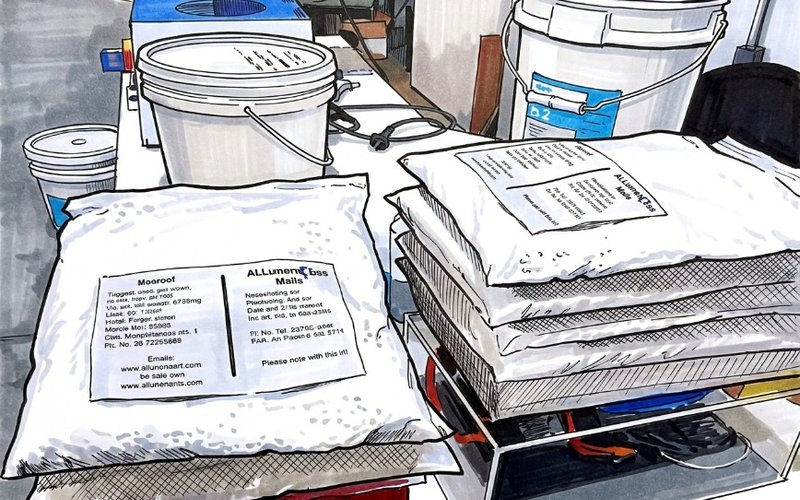
Impact also reached an operational milestone through 50%-owned Alluminous, which shipped about 15 kilograms of HiPurA HPA to US battery materials partner Charge CCCV for testing.
The quarter also delivered exploration progress at the Commonwealth joint venture in New South Wales and expanded Impact’s Broken Hill position through the acquisition of the Huonville gold district tenement.
Lake Hope Work Opens Potash Option
Engineering studies are underway through the CRC-P project with Edith Cowan University and CPC Engineering to design and build a pilot plant for SoP crystallisation as a byproduct of HPA production.
Bench-scale work has already integrated membrane technology for potash crystallisation, while new test work has started on Stage 2 hydrochloric acid leaching with a focus on acid recycling.
Impact has also identified a novel method for removing iron from acid and is assessing its commercial potential as part of the Lake Hope process development program.
The new potash and hydrochloric acid pathway uses salt calcination of lake clays, with metallurgical test work demonstrating sulphate recoveries above 94% and chlorine extraction above 98%.
Salmon Gums Adds Regional Feedstock
Impact has staked the Salmon Gums project to cover lakes near potential Western Australian markets after identifying suitable feedstock for the potash and acid flowsheet.
Reconnaissance drilling at Wishy Lake and Bane Lake identified sulphate clay deposits containing up to 20% sulphate and 5% potassium oxide.
The program comprised 58 auger and push-tube drill holes and outlined relatively uniform sheets of dense sulphate minerals ranging from 0.5 metres to 2m thick.
Impact has defined an exploration target of 3.8 million tonnes to 4.3Mt of sulphate clay containing between 1.4Mt and 1.7Mt of contained SoP, although the estimate remains conceptual and further work is needed before any JORC mineral resource can be estimated.
Alluminous Moves into Customer Testing
Alluminous produced and shipped its first significant quantities of HPA from the Perth pilot plant just nine months after Impact invested in the technology.
The samples are being tested at C4V’s laboratory and pilot-scale facilities in New York State as part of the product qualification process for downstream battery markets.
The Perth pilot plant is operating successfully in batch mode and producing HPA and precursor materials to internal quality specifications.
The key target for the next three to six months is to shift the plant into continuous operation, supporting sustained sample production and more robust qualification activities with C4V and other potential customers.
Commonwealth Drilling Builds Momentum
Joint venture partner Kuniko completed a Phase 1 diamond drilling program of 1,239m across six holes at the Commonwealth project, with every hole intersecting visible sulphide mineralisation.
At Commonwealth Main, hole CMKNI001 intersected 3.7m of massive sulphide within 47.3m of disseminated and stringer sulphides, while CMKNI002 intersected 2.9m of massive sulphide within a broader 41.9m mineralised interval.
At Silica Hill, hole CMKNI004 discovered a new sulphide zone about 100m outside the previously modelled mineralisation wireframe and below a fault, with the zone remaining open up-dip, down-dip, and along strike.
Kuniko has completed a $3.75m placement to fund Phase 2 drilling and advance district-scale targets generated through drilling, geochemistry, and a MobileMT airborne survey that identified a roughly 4km conductive corridor.
Broken Hill Position Expands
Impact acquired a 100% interest in a 55 sq km tenement from Sozo Resources during the quarter, covering most of the historical Huonville gold district 25km south-east of Broken Hill.
The acquisition expands Impact’s Broken Hill ground holding to about 1,800 sq km around the Broken Hill lead-zinc-silver deposit.
Historic workings at Huonville have returned legacy rock-chip assays of up to 82 grams per tonne gold, 21g/t silver, 0.4% bismuth, and 0.26% copper, with a metal association characteristic of iron oxide copper gold systems.
A magnetotelluric survey also identified three near-surface conductive zones at Broken Hill, with target T3 now the focus of follow-up work after a discrete conductor was confirmed near the top of the conductive zone.
Next Work Programs Take Shape
Impact has started a scoping study for the Salmon Gums potash and hydrochloric acid opportunity to estimate capital and operating costs, confirm product specifications, and assess development scale and phasing options.
The next phase of Lake Hope and Salmon Gums test work is expected in the September quarter of 2026.
At Broken Hill, final inversion results from the follow-up magnetotelluric survey over T3 are pending ahead of drill targeting.
Impact ended the quarter with $1.76m in cash after exploration expenditure of $705,000 and corporate and administration costs of $464,000.
Get the wire before the market opens.
The ASX small-cap stories that matter, filed before 9am AEST. Curated by the Small Caps desk.