
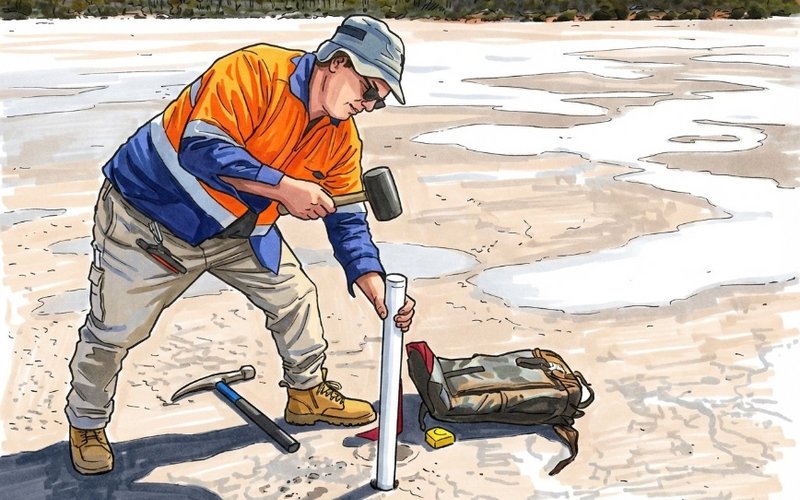

- 01IPT targets standalone SoP & HCl from WA lake clays.
- 02Bench: 94.75% K, 94.74% SO4; Cl to HCl.
- 03No ponds; Salmon Gums lakes feedstock; nearer markets.
Impact Minerals (ASX: IPT) has identified a new standalone development pathway to produce sulphate of potash (SoP) and hydrochloric acid from lake clays at Lake Hope and nearby Salmon Gums in Western Australia.
Metallurgical test work has demonstrated high sulphate recoveries exceeding 94% and chlorine extraction above 98% using a salt calcination process that operates independently from, and in parallel with, the Lake Hope High Purity Alumina development.
The pathway avoids evaporation ponds and instead relies on controlled calcination, positioning the opportunity as an alternative to earlier Australian SoP projects that faced climatic and operational constraints.
The company has identified and secured multiple lakes near Salmon Gums as potential early feedstock sources, located closer to potash markets in the Wheatbelt and hydrochloric acid demand in the Eastern Goldfields.
Salt Calcination Processing Route
Impact is assessing salt calcination of lake clays, where the material is mixed with commercially available chloride salts and heated to extract potassium and sulphate into solution for recovery as sulphate of potash.
During calcination, chlorine is released as a gas that can be captured and recovered as hydrochloric acid, while an aluminium-rich solid residue remains as a by-product.
Bench-scale testing demonstrated that potassium and sulphate extraction rates increase at higher temperatures and lower salt dosages, with the best test returning recoveries of 94.75% potassium and 94.74% sulphate.
The company said the process had achieved results that surpass historical benchmarks for similar techniques and warrants further investigation as a scalable production method.
SoP and Hydrochloric Acid Markets
SoP is a premium fertiliser valued for its low chloride content and suitability for chloride-sensitive crops, and Australia currently imports all of its SoP requirements.
Market enquiries cited by the company indicate imported SoP prices in WA typically range from A$800 to A$1,200 per tonne, reflecting limited supply and consistent demand.
Hydrochloric acid is widely used in gold processing, chemical manufacturing, and emerging clay-hosted rare earth element projects, with delivered prices reported to range from A$650 to more than A$1,000/t depending on location.
Test work confirmed that chlorine released during calcination can be captured and condensed as hydrochloric acid, demonstrating the potential to supplement constrained domestic supply.
Suitable Feedstock Sources
Following recognition of the new processing route, Impact identified additional lakes around Salmon Gums as suitable feedstock sources closer to end markets than Lake Hope.
These lakes are held within the same 80:20 incorporated joint venture with Playa One that underpins the Lake Hope project, collectively referred to as the Salmon Gums project.
Preliminary internal analysis suggests the potash and acid pathway could substantially enhance the value of both Lake Hope and Salmon Gums by monetising surplus lake clays beyond the requirements of the high purity alumina process.
The opportunity may be developed as a standalone operation or alongside the Lake Hope HPA project, potentially benefiting from shared infrastructure and regional synergies.
Scoping Study Underway
A Scoping Study is underway to assess technical and commercial viability, including capital and operating costs, development scale, and phasing options for the potash and acid opportunity.
Impact Minerals managing director Dr Mike Jones said, “We have found an additional way to create significant economic value from WA’s fascinating lake systems.”
“Although still in the early stages, the breakthrough results—particularly for acid production—indicate this approach could be a practical alternative to traditional potash methods, and help fill a noticeable supply gap for both fertiliser and industrial acid in WA,” Dr Jones added.
The company plans to continue metallurgical optimisation, refine its SoP crystallisation parameters, further test chlorine capture, and engage with fertiliser, chemical, and industrial groups as it advances the study.
Get the wire before the market opens.
The ASX small-cap stories that matter, filed before 9am AEST. Curated by the Small Caps desk.