
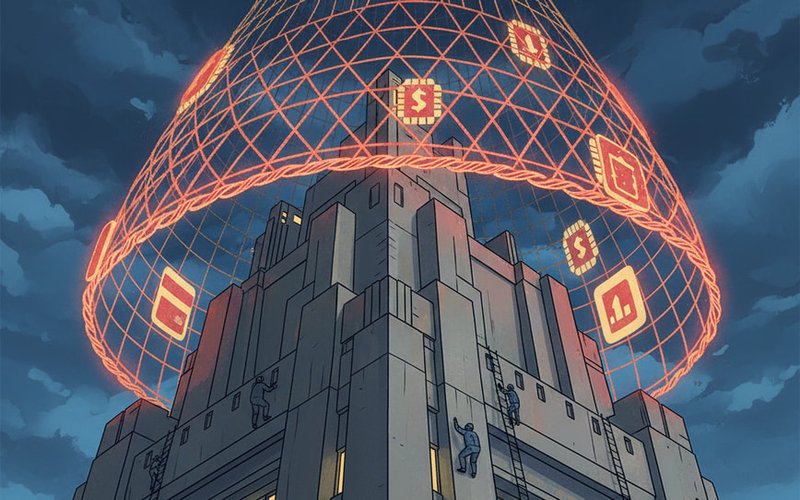

Higher taxes are on the way for large superannuation balances, and they come with a few surprises.
Draft legislation for the changes has been released, and it shows that the superannuation system will become like the progressive tax system that applies to wages and income, with three basic steps.
Three thresholds to watch
The first threshold is effectively the same as the current system and will apply to members who have up to $3 million.
They will face the current 15% tax on earnings for funds in the accumulation phase.
The next threshold applies to balances between million and million. In this bracket, an additional tax of up to 15% on the earnings in the fund will be imposed, potentially bringing the tax rate to 30%.
The top bracket for funds with balances above $10 million will have a tax rate of as much as 40% on the fund earnings.
All of these percentages may be reduced a little by features such as franked dividends on shares which have an attached tax credit.
Unrealised gains now off the menu
Following changes announced in October by Treasurer Jim Chalmers, the key thresholds will be indexed to inflation, and the new division 296 tax will no longer apply to unrealised gains.
The legislation is planned to come into effect by 1 July 2026 and will be introduced to Parliament early in the new year.
This sets an accelerated timetable for consultation with industry groups, which are due on 16 January. As a result, there are likely to be some curtailed holiday plans within the super industry.
Beware the new integrity measure
As you might expect, there are some interim arrangements covering funds that may want to restructure to avoid paying the top two tiers of tax.
For the first year only, the proportion of a fund that is above one of the thresholds will be arrived at from the balance at the end of the year.
For every year after that, as an integrity measure, the proportion of super fund 'earnings' on which members pay tax will no longer just be based on their super balance at the end of the financial year.
Instead, it will be based on the balance at the start or end of the financial year – whichever is higher.
This prevents a situation in which people might have a high super balance at the start of the year, then sell down and take money out of the fund to avoid the tax.
So, effectively there is a window of around 18 months for people to rearrange their super amounts if possible to avoid higher taxes but after that, they will be effectively caught in the tax net and need to pay the correct earnings tax based on their highest balance - whether that was at the start or the end of the financial year.
The integrity measure will also apply to super funds in the year the member dies, meaning the tax on earnings will depend on the balance of the fund before the member died.
This will effectively add a small death tax to every super fund belonging to a member who dies, reducing the amount available to estate beneficiaries.
Different rules for different super funds
The way these rules are applied will be different, depending on what sort of super fund you have.
Retail and industry funds that are regulated by the Australian Prudential Regulation Authority will calculate the taxes in a different way to self-managed super funds (SMSFs).
SMSF members will be able to work out the exact amount that will be subject to the tax because of the small numbers allowed in a single fund.
It is relatively easy to work out the exact amount of tax to be paid on assets held in an SMSF, but it is a far more problematic calculation for retail and industry funds that use massive pooled funds that don’t directly identify each member’s asset holdings.
Instead of precise calculations, these big funds will be allowed to use a “fair and reasonable” estimate of how much tax is attributed to an individual member.
Factors in working out the tax would include the investment strategy and tenure of the individual member in the fund, but the tax paid will be less precise than the calculations available for an SMSF.
That is probably a logical distinction to draw given the structure of large funds, but it is another key difference to consider when choosing what sort of fund suits your individual circumstances.
The tax will also be applied to members with defined benefit pensions, including judges and senior public servants, but the calculations will be quite intricate.
New levels of complexity
While there is undoubtedly a new level of complexity added to the super system by these new progressive tax rules, it is important to remember that they will only apply to a very small number of people with very large super balances.
Overall, the new policy is expected to hit fewer than 0.5% of Australians with superannuation accounts in 2026-27, and that proportion should stay steady or even drop due to indexation of the scales and active changes by wealthy people to restructure their investments.
The highest rate of tax on balances above $10 million will be even less common, affecting fewer than 0.1% of Australians with superannuation accounts.
Like many taxes, this one is designed to change behaviour, rather than just collect tax, by preventing the build-up of very large super balances within the highly tax-advantaged superannuation system.
Get the wire before the market opens.
The ASX small-cap stories that matter, filed before 9am AEST. Curated by the Small Caps desk.