
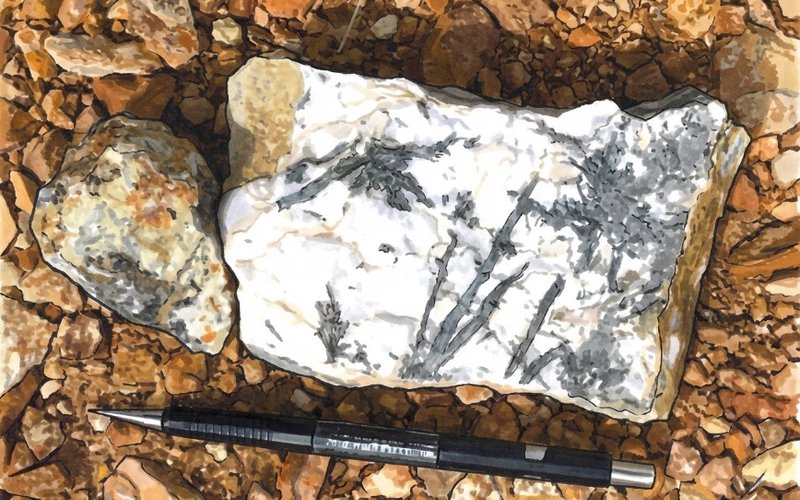

Great Northern Minerals (ASX: GNM) has reported a significant antimony discovery at its Catalyst Ridge project after surface sampling identified a quartz–stibnite vein extending for up to one kilometre.
Initial rock chip sampling from the newly identified Antimony Gulch prospect returned high-grade antimony assays of up to 7.1%, with associated silver and tungsten values.
The company made the discovery during early-stage field work and coincides with it lodging applications to expand the Catalyst Ridge project area to 20.48 square kilometres.
Great Northern Minerals said the results highlight the potential for near-surface antimony mineralisation and support broader exploration upside across the expanded project footprint.
Antimony Gulch Discovery
Field reconnaissance identified a quartz–stibnite vein system with observed widths of up to 6m, while rock-chip samples collected from historical mine dumps at an old adit returned standout assays including 7.06% antimony with 23.3 grams per tonne silver and 0.41% tungsten, 6.16% antimony with 6.9g/t silver, and 3.53% antimony with 12.6g/t silver.
Great Northern Minerals said the vein displays characteristics consistent with the upper levels of a low-sulphidation epithermal system, with additional sampling along strike confirming elevated antimony, silver, and tungsten values despite limited surface exposure in places.
The company considers the setting favourable for two styles of mineralisation, comprising near-surface stibnite-hosted antimony and epithermal gold-silver mineralisation at depth.
The prospect lies along a prominent north-northwest structural corridor that aligns with the nearby Colosseum gold deposit that hosts more than one million ounces of gold.
Permit Application Lodged
Great Northern Minerals has submitted applications for a mineral prospecting permit covering an additional 640 acres of adjoining ground, expanding the footprint of the Catalyst Ridge project to 20.48 square kilometres.
The expanded area is considered highly prospective for antimony and provides scope to test the continuity of the newly identified vein system along strike and at depth.
The company plans to carry out further detailed mapping and surface sampling, followed by dipole–dipole induced polarisation surveys to define sulphide-rich zones and refine drill targets.
Non-executive chair Eddie King said the discovery reinforced Catalyst Ridge strategic potential.
“We are excited about the geological similarities to known deposits in the area and look forward to advancing exploration to unlock further value for our shareholders,” he added.
Get the wire before the market opens.
The ASX small-cap stories that matter, filed before 9am AEST. Curated by the Small Caps desk.