
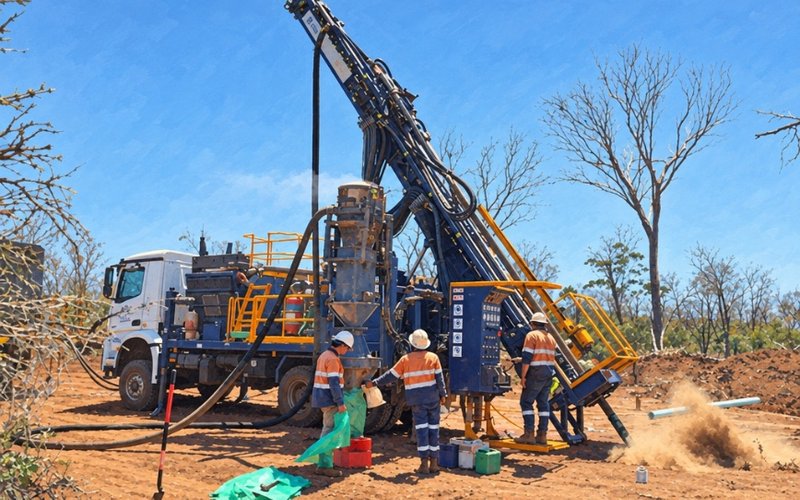

- 01Galileo starts 2,000m RC drilling at Mission Sill.
- 02Two PGM zones to test for deeper PGM, copper and nickel mineralisation.
- 03Assays expected about six weeks after drilling ends.
Galileo Mining (ASX: GAL) has started a reverse circulation (RC) drilling program covering 2,000 metres at its Mission Sill prospect within the wholly owned Norseman project in Western Australia.
The campaign will test for higher-grade platinum group metals (PGMs), copper, and nickel around shallow sulphide mineralisation identified in earlier drilling.
Exploration is focused on two zones of anomalous PGMs extending along 1.4 kilometres and 2km of strike respectively, giving Galileo substantial areas to test beyond earlier drill intersections.
Galileo will also drill across the gabbro-ultramafic contact at a previously untested position and examine a bedrock target beneath an anomalous weathered zone at Mission Sill South.
The company expects drilling to take about two weeks and assay results to follow approximately six weeks after the program finishes.
Shallow Sulphide Drilling
Limited RC drilling in December 2025 identified sulphide-bearing pyroxenite units beneath the contact between ultramafic and mafic rocks in both target zones.
Previous intersections included 8m at 0.42 grams per tonne in combined palladium, platinum, and gold, including 2m at 0.88g/t, and a separate 17m interval at 0.36g/t.
The new holes will investigate mineralisation at depth and along strike from those intersections, with particular attention to sulphide-rich positions within the host sill complex.
“With previous RC drilling uncovering sulphide zones at shallow depths within the same area, we are enthusiastic about the possibility of new PGM copper nickel discoveries,” managing director Brad Underwood said.
“Our strong cash position allows us to continue work during a period of market volatility as we aim to make new discoveries in a highly prospective and underexplored mineral province.”
Regional Aircore Targets
Recent aircore drilling outlined anomalous mineralisation on every completed line at Mission Sill, strengthening the rationale for testing the two extended trends with deeper RC holes.
The prospect sits within Galileo’s broader Norseman holding, where the Callisto discovery has established a separate mineralised sill system and provided a geological model for further targeting.
At Callisto, the existing mineral resource estimate comprises 17.5 million tonnes at 2.3g/t palladium equivalent, alongside reported nickel and copper grades.
Galileo has recently completed aircore drilling at Callisto North and reconnaissance work along a prospective 20km trend around the resource, with assays from that work still pending.
Broader Exploration Work
The Norseman tenements cover about 255 square kilometres, with the current Mission Sill campaign forming part of a wider search for mineralisation beyond the established Callisto resource.
Galileo held approximately $6.9 million in cash at the end of September and considers its planned exploration programs fully funded.
The funding position enables work to continue while results from Callisto North and Mission Sill are assessed and subsequent drill targets are prioritised.
For the immediate program, the next milestone is completion of the RC holes before laboratory assays determine whether the sulphide targets warrant additional testing.
Get the wire before the market opens.
The ASX small-cap stories that matter, filed before 9am AEST. Curated by the Small Caps desk.