
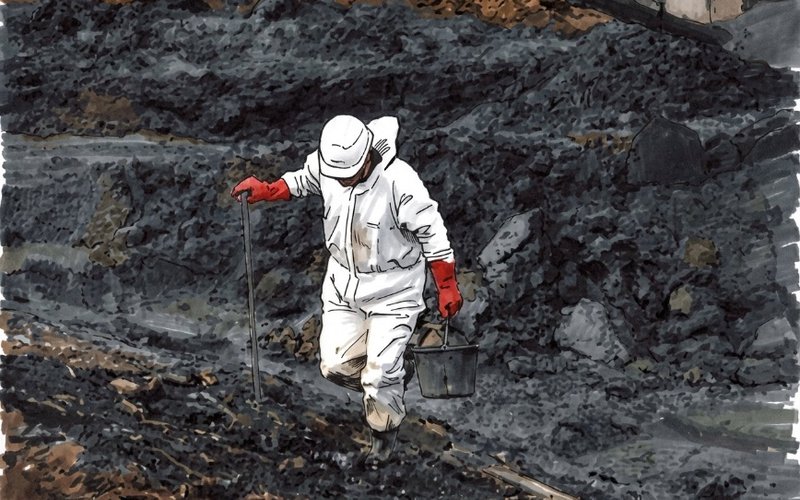

- 01REM: PFAS destruction; >96% defluorination; 99.98% PFOA.
- 02No chemicals; no liquid waste; 1000C in 60s.
- 0312m progress: new board; Rice licence; advisory board.
Environmental Clean Technologies (ASX: ECT) has provided an update on the development of its Rapid Electrothermal Mineralisation (REM) technology aimed at addressing the absence of scalable, in-situ solutions for permanently destroying per- and polyfluoroalkyl substances (PFAS)—known as “forever chemicals”—in soil.
The update follows a 12-month period that included a refreshed board, a revised corporate strategy, the acquisition of an exclusive licence from Rice University, and the establishment of an advisory board to support development and commercialisation.
Laboratory testing under controlled conditions has demonstrated high levels of PFAS destruction, and recent hardware advances are intended to address key scalability and cost barriers to in-situ deployment.
PFAS contamination is widely recognised as a growing environmental and public health challenge, with remediation markets driven by tightening regulation, constrained disposal capacity, and the lack of permanent destruction technologies.
REM Technology And Validation
ECT is developing the REM technology as a subset of Flash Joule Heating, a proprietary process invented at Rice University that applies high-voltage electrical current directly within soil.
The process is designed to generate temperatures exceeding approximately 1,000 degrees Celsius within around 60 seconds, with the objective of breaking carbon–fluorine bonds and converting PFAS into inert, non-toxic fluoride salts.
Laboratory testing has reported defluorination efficiencies exceeding 96% and removal of perfluorooctanoic acid of up to 99.98%, providing the basis for ongoing scale-up and system validation.
The company states that the electricity-based approach avoids the use of chemical additives and does not generate secondary liquid waste streams, distinguishing it from conventional remediation methods.
Addressing Scalability Constraints
Early REM configurations relied on conductive additives such as biochar to facilitate current flow through soil, which added cost and complexity and limited suitability for large-scale deployment.
To address this constraint, the company has been developing a high-voltage, high-frequency REM system designed to operate without conductive additives while maintaining effectiveness.
Testing to date has demonstrated voltage scaling from 160 volts to 500 volts and power output increases from 500 watts to more than 1,600 watts, alongside uniform soil heating to approximately 1,000 degrees Celsius at kilogram scale.
Safety testing and hardware validation of this next-generation system are now in their final stages, representing a key step toward pilot-scale development.
Modular REM Development
Environmental Clean Technologies intends to develop modular REM units capable of both in-situ treatment and deployment to PFAS-contaminated soil currently stored in containers or barrels.
The company is currently in the capacity build period, defined as Phase 1, with the aim of entering prototype validation and regulatory readiness in Phase 2.
Phase 3 is planned to focus on deployment and pilot readiness, with a mobile pilot system designed to demonstrate on-site remediation capability using the same hardware as the prototype but rated for higher power output.
The staged roadmap is intended to support a pathway from laboratory validation through to scalable commercial systems, subject to regulatory, safety, and engineering outcomes.
2025 Terrajoule Acquisition
Environmental Clean Technologies completed the acquisition of Terrajoule Pty Ltd in December 2025, securing the licence to use Flash Joule Heating and REM technology for PFAS soil remediation.
Executive chair Faldi Ismail said the company’s recent progress continues to build on its strong momentum since the acquisition.
“There is currently no scalable, in-situ solution for permanently destroying PFAS in soil,” Mr Ismail said.
“REM is being developed to address that precise challenge, and our progress over the past 12 months reflects a deliberate focus on solving a problem the market already recognises as critical.”
The company is also assessing complementary Rice University technology for PFAS remediation in water and has expanded its technical team to support ongoing development.
ECT expects the completion of safety testing, prototype finalisation, and permitting activities to underpin progression toward pilot-scale deployment.
Get the wire before the market opens.
The ASX small-cap stories that matter, filed before 9am AEST. Curated by the Small Caps desk.