

- 01Two new commercial deals secure over A$200,000, validating Ultra Edge platform.
- 02Advancements in 22nm RRAM technology target enhanced on-device AI for robotics and wearables.
- 03Select Network expansion and strategic partnerships underpin commercial rollout.
DorsaVi (ASX: DVL) has announced two significant commercial milestones, the Dr Patel collaboration and the SEROMA European study, totalling over A$200,000 in contracted revenue.
These deals validate the company's Ultra Edge platform and its on-device AI capabilities across elite sport and clinical trials, while also signalling progress in its RRAM technology for advanced computing.
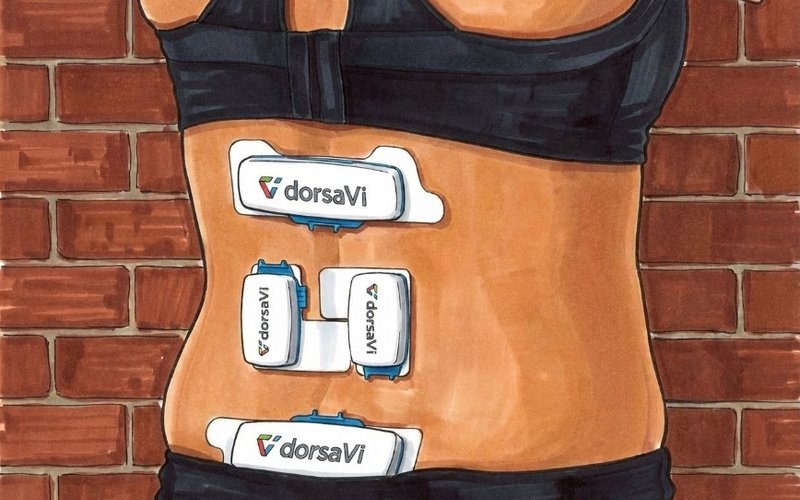
The Dr Patel engagement is an 8-month project, focused on developing a premium lower-limb analytics module within ViMove+. This project is targeting revenue in 2026.
The SEROMA European study has selected ViMove+ for Axial Spondyloarthritis (axSpA) across six sites.
Three global pharmaceutical groups are engaged in this study, in which on-device AI will enable real-time metrics.
Both of these agreements leverage DorsaVi's Onboard Sensor Processing (OSP) technology. OSP enables real-time, on-device AI inference, meaning it operates without reliance on cloud-based processing.
On-Device AI Expansion
The Ultra Edge platform’s on-device AI capabilities are undergoing expansion through these recent commercial agreements.
This growth is anticipated across elite sport, clinical trials, and emerging robotics markets.
DorsaVi is also making significant progress on its 22-nm RRAM and neuromorphic computing program targeting efficiency exceeding 20 TOPS/W.
This RRAM development is geared towards uplifting on-device AI performance in wearables and clinical trials.
It also positions the company for emerging opportunities in the robotics sector.
Select Network Growth
The Select Medical Network has now surpassed 120 active sites.
The ViMove+ system is integrated on the Select Hub, enabling scalable deployment across physiotherapy practices.
Further trials are currently underway with additional US East Coast physiotherapy groups.
These trials aim to expand the clinical network and validate ViMove+ across diverse operational environments.
RRAM Development Continues
DorsaVi is actively advancing its RRAM technology. Initial device-level evaluation of RRAM at the 180-nm node is currently underway.
The company's roadmap targets a 22-nm RRAM platform, a development designed to enable higher density, faster access, and lower power consumption for a range of edge AI applications.
This ongoing RRAM development aligns with broader industry trends addressing memory constraints and data movement bottlenecks that are increasingly prevalent in AI computing.
Get the wire before the market opens.
The ASX small-cap stories that matter, filed before 9am AEST. Curated by the Small Caps desk.