
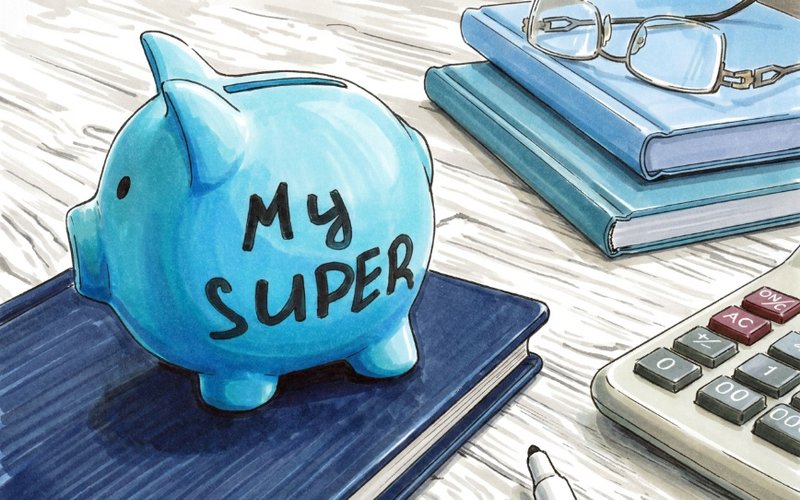

- 01Be vigilant on how your super is invested.
- 02Platforms rise: planner-led funds, MySuper.
- 03Regulators scrutinise platforms after big losses.
If the Shield and First Guardian collapses have taught us one thing, it is the need to be really vigilant about where and how our super savings are being invested.
Increasingly, that also means making a decision between the two emerging superannuation systems that have become prevalent since the significant reshaping of the industry caused by the banking Royal Commission.
It used to be that your basic choice was between an industry fund or a retail fund—with the more niche choice of a Self Managed Superannuation Fund (SMSF) an option more suited to those with substantial balances.
Super Picture Changing Fast
That picture has now changed markedly.
There are still the giant industry funds and also some large retail funds no longer owned by banks that operate in a similar manner to the industry funds, so that part has remained similar and has been simplified with the emergence of basic MySuper funds.
Then there are the financial planner led funds that in some senses are self-managed funds but instead of old school SMSFs, they are effectively run off various investment platforms.
Platforms existed before the super changes, of course, but have rapidly developed into a one-stop shop for financial planners and fund changing spruikers, as we saw with the rapid sale of dodgy Shield and First Guardian funds.
Platforms Offer Some Benefits
The idea of these is that the platform consolidates all of the super and non-super investments, allowing the financial planner to centralise all tax and dividend records, and also give timely and knowledgeable advice and make changes if needed every time investments are reviewed—usually annually.
It is worth noting here that the vast bulk of the more than $1 billion of superannuation losses through Shield and First Guardian occurred through platform investments after some fairly intense marketing approaches.
This has given rise to a very strong and multi-pronged regulatory and investigative reaction from ASIC (the Australian Securities and Investments Commission).
Many of those investigations and actions are ongoing and it is difficult to predict where they might land but the key takeaway is that platforms, financial advisors and fund trustees are certainly all feeling the pressure of what has become the biggest and most important super scandal which has happened after the Royal Commission.
War of Words Unfolds
It has also provoked something of a war of words between what has become the two sides of the super divide—the Super Members Council (SMC), which represents the big industry funds including AustralianSuper and Australian Retirement Trust (ART), and the Financial Services Council (FSC), which covers many large retail funds such as AMP and Colonial and also large platforms such as BT Financial and HUB24.
Both sides claim to be wearing the white hats and standing up for super fund members, but the temperature of the debate is now growing white hot.
The SMC claims that the FSC has been making selective claims about the performance and costs of platform super funds compared with performance-tested mainstream MySuper funds.
Their basic point is that figures used have failed to include the cost of using a financial planner, usually the only way to get access to a wholesale platform investment.
For its part, some FSC research conducted by NMG Consulting found that—by making relatively simple decisions early in a person's working life, such as switching to a lower-fee or higher-growth superannuation option—people can substantially increase retirement savings compared to simply remaining in a default MySuper product.
Higher Admin Fee Claims
SMC has also disputed the FSC's report, claiming that members of platform super products typically pay higher administrative fees, have lower exposure to growth assets and have lower risk-adjusted returns.
“Rather than switching to more complex and costly products where higher fees can erode their super, most consumers would be best served by taking simple and practical initial steps to grow their retirement savings using tools, support and guidance available at no cost or low cost from their own trusted mainstream super fund,’’ is how the SMC sees it.
However, the FSC report suggested an individual who switches to a lower-fee, high growth investment option from age 30 could retire with an extra $690,000 compared to someone sticking with a default MySuper fund.
FSC chief executive Blake Briggs has also challenged the idea that platform super is inherently more expensive than MySuper products, pointing to compact and mini-wrap platforms showing comparable fees for higher balances, and has also claimed that greater engagement with superannuation at key life stages could materially improve long-term financial outcomes.
He has claimed that any policy proposals that make it harder for Australians to exercise control over their superannuation will directly harm their financial wellbeing.
Important Lessons Learned
While we need to see where the regulatory action from ASIC ends up before making hard and fast rules, there are some important lessons everybody can learn from this saga.
One is to make sure you make a fully considered and nuanced decision before changing your superannuation.
The Shield / First Guardian saga showed everybody the importance of ignoring some fast-talking phone call offering better returns without doing a lot more background research.
Too Early to Take Sides
I won’t take sides in the FSC versus SMC debate other than to say that both sides make some valid points but they seem to be addressing different audiences.
For the average person on an average salary, there should be no problem sticking with a low fee, high performing industry or retail super fund—be it MySuper or otherwise.
What they should prioritise is ensuring two things: that their in-fund insurance is adequate for their needs and not too expensive, and that the risk rating of the fund is appropriate for their personal tolerance, age, and family circumstances.
In general terms, due to the long investment horizon of super, you are best served taking the highest risk rating you can tolerate with the caveat that this will result in more volatility but should produce a higher balance at retirement.
It is all about sleeping well at night rather than going into a panic every time the share market takes a rapid dive and that is a very personal measure.
In terms of financial planning advice, everybody should feel empowered to reject the idea of moving to an investment platform if they are not comfortable with that idea.
And most good financial planners would be happy to work within the framework of an existing industry or other low cost, well performed super fund.
Again, in general terms, taking a platform approach will almost always have higher fees – particularly for smaller super balances – but does come with the advantage of a greater range of investment choices that can be easily personalised for different life stages.
It is also possible to replicate much of that personalisation by using the choice options within most superannuation funds—all the way through to selecting your own Exchange Traded Funds or local or foreign shares to buy within the envelope of a super fund if you really want to.
Planners Can Add Value
Financial planners can also add significant value when it comes to ways to maximise superannuation contributions, repay loans and restructure financial settings so there are certainly benefits to be gained by having a planner.
The question really is do you want to have a planner for the long term with annual reviews of your investments and, if necessary, also have those investments and super on a platform which also charges fees?
Or would you be happier sticking with your existing super fund and using its internal advice and investment options and only retain a planner for periodic advice – or even to keep improving your financial education and do everything yourself.
The choice is a very personal one that depends on your individual circumstances and what you are comfortable with.
Ignore the Sales Spiel
Whatever you choose, it is important never to feel pressured to “go along” with any recommendations that are made.
After all, the real lesson from the Shield and First Guardian debacles is to think very long and hard before making changes to your superannuation and not to be hasty based on a sales spiel built around promised higher returns.
Most financial planners worth their salt should be happy to let you stick with a low-cost super fund that you are happy with, if that is what you want.
If they want everything on a platform for their convenience, it might be time to look for someone else.
Get the wire before the market opens.
The ASX small-cap stories that matter, filed before 9am AEST. Curated by the Small Caps desk.