

- 01Cob/Glomar JV: US 200ktpa nodule refinery.
- 02Feasibility study in 24 months.
- 03Nodules deliver Co, Ni, Mn, Cu, REEs.
- 04Cob's hydromet tech >90% extraction.
For investors tracking the critical minerals sector, the recent consortium agreement between Cobalt Blue (ASX: COB) and US-based marine extraction firm Glomar Minerals represents more than just a joint venture. It targets to solve the deep-sea mining constraint, economically viable processing.
Last month, Cobalt Blue announced "Project Infinity," a consortium with Glomar Minerals aimed at developing a world-first 200,000-tonne-per-annum polymetallic nodule processing facility in the United States.
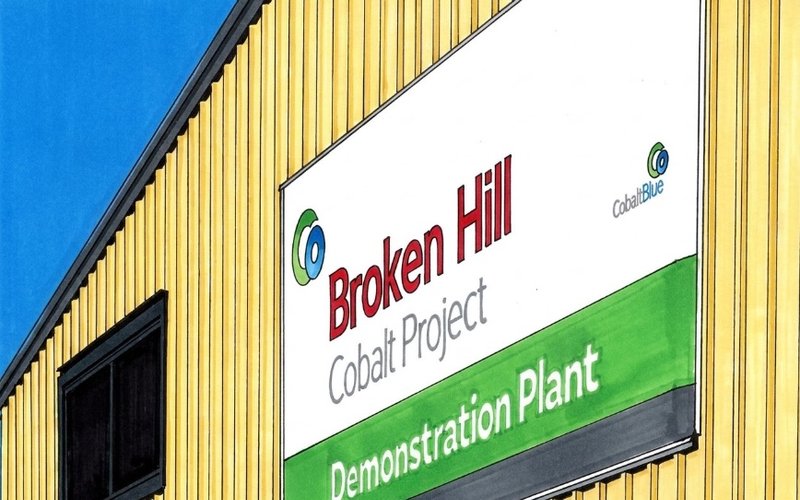
While the market digested the news of a 24-month feasibility study utilising COB’s Broken Hill Technology Centre, connecting the dots on the global macroeconomic landscape reveals just how strategic this positioning is for the Australian company.
Potential v Processing
Polymetallic nodules—golf-ball-sized mineral deposits scattered across the deep ocean floor in regions like the Clarion-Clipperton Zone and the Cook Islands Exclusive Economic Zone—are widely viewed as the holy grail of critical minerals.
A single nodule provides a multi-commodity feedstock rich in cobalt, nickel, manganese, copper, and rare earth elements, effectively negating the need to "shift mountains" of terrestrial rock and generating drastically less waste.
However, extracting the value from these nodules has been met with scrutiny. A December 2025 independent study commissioned by Greenpeace International, focusing on the Cook Islands' nodule reserves, highlighted severe economic hurdles facing the sector.
The report, conducted by Trytten Consulting, noted that deep-sea extraction costs are immense. Crucially, the report stated that “there are no single processing facilities worldwide capable of converting raw nodules into saleable metals, and building new plants and supply chains would involve major technical and financial risks.”
Critics have argued that without proven, cost-effective metallurgical pathways, the estimated market value of these raw nodules falls far below the level needed to support a profitable global industry.
Adding Tech to Scale
This is precisely where Cobalt Blue’s recent pivot shifts the narrative. The criticism leveled at the broader deep-sea mining industry is that the processing technology doesn't exist at commercial scale. Cobalt Blue is stepping in to fill that exact void.
Through its patented hydrometallurgical technology, initially developed and refined for its Broken Hill Cobalt Project and the Kwinana Cobalt Refinery, COB has already successfully piloted process flowsheets capable of recovering multi-commodity metals from polymetallic nodules. To date, the company has achieved greater than 90% extraction of manganese, cobalt, and nickel from these deep-sea deposits.
By leveraging the $15 million already invested into its Broken Hill Technology Centre, Cobalt Blue can undertake the feasibility and pilot test work for Glomar Minerals with minimal new capital expenditure. For the deep-sea mining sector, COB’s flowsheet directly answers the technological and financial criticisms cited by industry sceptics.
The Geopolitical Catalyst
The significance of the COB-Glomar partnership is amplified by the current geopolitical climate. China continues to control roughly 90% of the world’s rare earth and critical mineral processing. As Beijing increasingly threatens export restrictions on Western nations, the United States has accelerated its search for secure, allied supply chains.
The US government has made deep-sea minerals a focal point of its advanced manufacturing and defence strategies. However, harvesting nodules from the seafloor is only half the battle; without domestic or allied processing capabilities, those raw materials would simply have to be shipped back to adversary nations for refinement.
By aiming to build the first commercial nodule refinery on US soil, the Glomar/Cobalt Blue consortium directly aligns with the US–Australia Framework for Securing Supply in the Mining and Processing of Critical Minerals.
It elevates Cobalt Blue from an Australian project developer to a preferred, US-aligned technology partner operating at the epicentre of a strategic defence initiative.
Timely Market Entry
The timing of Project Infinity aligns perfectly with a dramatic resurgence in critical mineral valuations.
Cobalt, for example, is currently trading above US$56,000 per tonne, up roughly 67% year-over-year, propelled by the Democratic Republic of the Congo export quotas and tightening global supply chains.
With the US urgently seeking ex-China processing hubs amidst these surging commodity costs, Cobalt Blue’s proprietary processing technology transitions from a strategic advantage into an immediate commercial necessity.
The Investor Takeaway
Cobalt Blue’s entry into deep-sea mineral processing signifies a major expansion of its business model.
The company is monetising its proprietary intellectual property for a new, multi-commodity global supply chain.
If Cobalt Blue’s 24-month feasibility study successfully transitions its >90% extraction rates into a commercially viable US facility, the company will have uniquely positioned itself to capture immense value from one of the world's most significant untapped resources.
Get the wire before the market opens.
The ASX small-cap stories that matter, filed before 9am AEST. Curated by the Small Caps desk.