
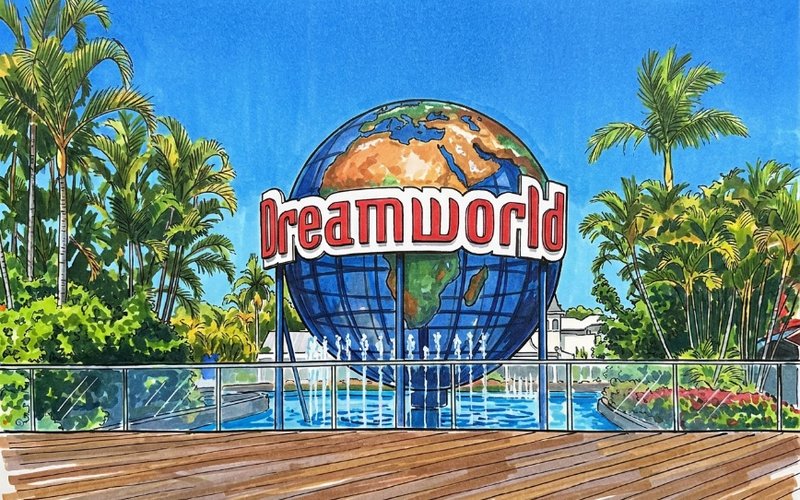

- 01Queensland approves 55ha Coomera plan for four precincts.
- 02Dreamworld/WhiteWater expansion; eco-tourism.
- 03Town centre with housing, healthcare, retail.
The Queensland government has approved a development application by Coast Entertainment Holdings (ASX: CEH) for its 55-hectare landholding in Coomera, unlocking a four-precinct mixed-use masterplan alongside its existing Dreamworld and WhiteWater World theme parks.
The long-awaited approval—the application was lodged in September 2023—allows for an expanded set of supporting and complementary land uses outlined in Coast’s Dreamworld Development Code (DDC), paving the way for a new tourism and housing development set to transform the northern Gold Coast over the coming decade.
The DDC will guide development across four key precincts including continued operation and expansion of Dreamworld and WhiteWater World, low-impact eco-tourism experiences including viewing platforms and guided tours, tourist attractions, theme park rides, short-term accommodation, resort complexes, and hospitality and entertainment venues.
A town centre comprising high-density residential developments, residential care facilities, health care services, and short-term accommodation alongside retail, business, and hospitality outlets is also planned.
Coomera Development Potential
Chief executive Greg Yong said the approval represented a significant milestone for Coast (formerly Ardent Leisure) offering greater certainty over the future uses and development potential of the Coomera landholding.
“The scale of what is possible here is significant—we are situated at the heart of the southern hemisphere’s largest theme park destination surrounded by a rapidly growing residential community, a burgeoning industrial and marine sector, and the emerging Coomera health precinct,” he said.
“Add to that a chronic shortage of quality hotel accommodation between the northern Gold Coast and Brisbane and a clear tailwind into the 2032 Brisbane Olympic and Paralympic Games, and we believe this is among the most compelling mixed-use development opportunities in the country today.”
Group chair Dr Gary Weiss said the approval was the culmination of “years of considerable effort by management and the board” to secure meaningful and enduring certainty over the future uses of the Coomera landholding.
“I want to thank the Queensland government for its constructive engagement and support of our development plans, the City of Gold Coast for its steadfast support and ongoing partnership and our team, and consultants whose commitment and expertise have been integral to reaching this point,” he said.
Business Unit Performance
Coast’s Theme Parks & Attractions business unit turned in a solid performance for the 2026 financial year, reflecting continued positive momentum and a strong contribution from new attractions launched over the past 18 months.
Ticket sales for Dreamworld increased by 33% on the previous year, while total visits increased by 29.3% despite ongoing economic headwinds impacting the consumer discretionary sector and a softening of tourist numbers during the Easter holiday period.
Revenue for the year grew 20.8% on the previous year, underpinned by strong demand from the local market which generated a higher proportion of annual pass sales and associated visits than in prior periods.
In addition, the group’s deferred income balance increased by 58.7% to $20.2 million to end June, reflecting strong growth in annual pass sales and providing a solid revenue base for the coming year.
2016 Ride Disaster
Dr Weiss said the company had worked hard on a restoring its reputation since the 2016 Thunder River Rapids disaster which led to $95.2m in incident costs, $49.4m in corporate losses, a 45-day shutdown and 27% drop in park attendance.
“When I joined this group, our Theme Parks & Attractions business was part of a fragmented collection of companies carrying the weight of significant challenges,” Dr Weiss said.
“The 2016 accident cast a long shadow over the business and everyone associated with it, and just as the recovery was finding its footing the global pandemic and prolonged economic headwinds that followed presented a once-in-a-generation test of resilience for the entire industry."
“Through it all, the board made a deliberate choice to stay the course – to back this business, its people and the communities it serves – when others may have chosen to walk away.”
“The fact that Dreamworld is today a strong and growing business is a credit to the management and all team members who delivered that recovery.”
Get the wire before the market opens.
The ASX small-cap stories that matter, filed before 9am AEST. Curated by the Small Caps desk.