

- 01CTS: 3rd CUREator+ milestone; final $692,578 tranche due soon.
- 02IGN and lift-assist prototypes completed.
- 03Mid-2027 finish; $2.4m grant awarded Jul-2025.
Ceretas (ASX: CTS) has completed a third milestone for its CUREator+ Dementia & Cognitive Decline program, unlocking a final non-dilutive funding tranche of $692,578 expected in the coming weeks.
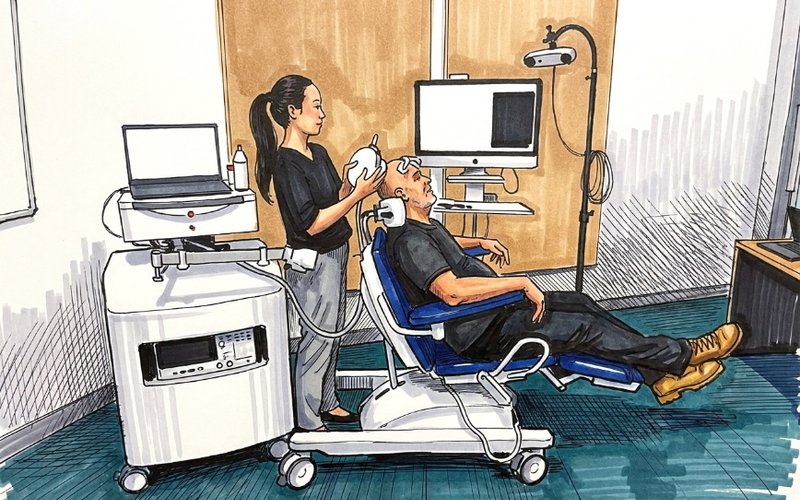
The milestone covers development of fully functional prototypes for an in-house image-guided neuronavigation (IGN) system and a collaborative lift assist device, both intended for Ceretas’ next-generation therapeutic ultrasound platform.
The work is designed to improve usability and lower the cost of goods, including reducing the number of operators required to use the device from two to one.
Ceretas completed the milestone on schedule and says the broader development program remains on track for completion by mid-2027.
New Device Components
Ceretas was awarded a $2.4 million grant in July 2025 through the CUREator+ program—which is being delivered by Brandon BioCatalyst with ANDHealth and Dementia Australia—under the Australian government’s Medical Research Future Fund BioMedTech Incubator initiative.
The funding supports development of the proprietary IGN software and lift assist device as two foundational components of the company’s next-generation platform.
Ceretas intends IGN to replace the off-the-shelf system currently used, allowing the clinician interface to be customised while simplifying treatment planning and ultrasound delivery.
The lift assist device, developed with Melbourne-based medtech product development company Planet Innovation, is designed to help operators position the ultrasound probe accurately and steadily on a patient’s head.
Prototype Usability Work
Both prototypes have been delivered and accepted by Brandon BioCatalyst, completing the third milestone and triggering the final funding payment.
Ceretas expects the two components to improve usability and reduce the cost of goods for its next-generation device, including through the move to proprietary navigation software.
“Both will significantly improve usability, including reducing the number of operators from two to one,” chief executive officer and managing director Dr Rachel de las Heras said.
“Developing our own IGN lets us fully customise the clinician experience, providing an easy-to-use, efficient tool to plan treatment and perform ultrasound sonication accurately.”
The company is developing the platform to treat Alzheimer’s disease and other neurodegenerative conditions using low-intensity focused ultrasound directed through the skull.
QBI Research Basis
Ceretas’ technology is designed to act through neuromodulation, targeting neural circuits involved in memory, cognition and behavioural and psychological symptoms of dementia, and through blood-brain barrier opening.
The platform is based on more than a decade of research at The University of Queensland and the Queensland Brain Institute (QBI), where researchers completed a first-in-human Phase 1 trial in 12 Alzheimer’s participants in 2024.
Ceretas is preparing to commence its Phase 2 CERE-CALM trial evaluating the platform in Alzheimer’s patients with behavioural and psychological symptoms of dementia.
QBI researchers are separately running the Phase 2 AGIFUS trial evaluating the same technology in Alzheimer’s-related agitation, with that study funded independently by Queensland Health.
Get the wire before the market opens.
The ASX small-cap stories that matter, filed before 9am AEST. Curated by the Small Caps desk.