

- 01Centenary Zone hit: 25.8m @ 11.7% ZnEq / 323 g/t AgEq.
- 02500% wider, 27% higher grade vs 2024 MRE.
- 03Near Main Lode; brownfields upside; MRE upgrade planned.
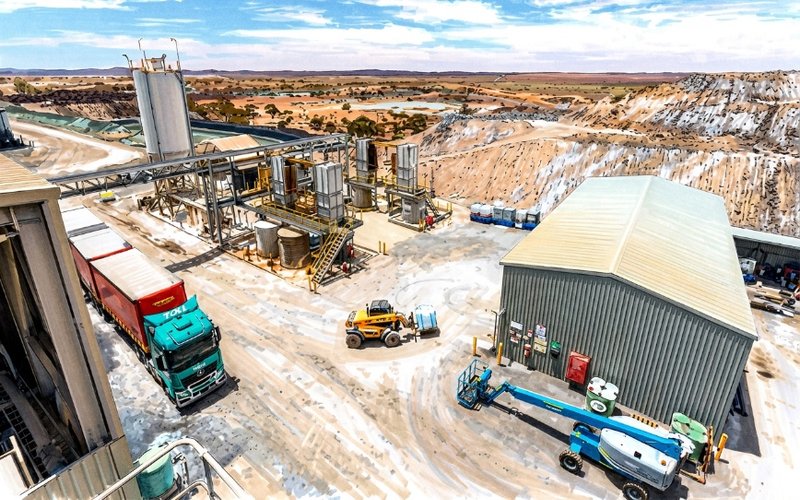
Broken Hill Mines (ASX: BHM) has discovered high-grade bulk-tonnage mineralisation at its flagship Rasp silver-lead-zinc mine in New South Wales.
Targeted maiden drilling below the Globe-Vauxhall Shear has delivered a thick intercept within the Centenary Zone located 250m from the Western Mineralisation orebody.
The intercept returned a best assay of 25.8 metres at 11.7% zinc equivalent and 323 grams per tonne silver equivalent (39g/t silver, 2.3% lead, 7.9% zinc, 0.2% copper, and 0.1g/t gold) from 415.1m, including 10.9m at 17.3% ZnEq and 479g/t AgEq (58g/t silver, 4.1% lead, 11.5% zinc, 0.1% copper, and 0.1g/t gold) from 422m.
It is thought to be 500% wider and 27% higher in grade than areas modelled by a 2024 inferred mineral resource estimate (MRE) for Centenary of 4.8 million tonnes at 9.2% ZnEq and 255g/t AgEq (39g/t silver, 2.4% lead, and 6% zinc).
Main Lode Similarities
Broken Hill said the new discovery represented a significant tonnage and grade upside, with initial analysis of the mineralisation within the drill core demonstrating a strong similarity to the Main Lode orebody at Rasp.
The company is now expediting a review of historical assays within the Centenary Zone, and an accelerated drilling program is underway to establish a new exploration target ahead of a planned MRE upgrade for the Rasp mine before year end.
Centenary’s proximity to BHM’s current Rasp operations at Western Min—placing it within practical reach of existing declines, ventilation, and haulage infrastructure—offers the company a brownfields development pathway with lower capital requirements than a standalone project.
Development of the zone could potentially deliver high-grade bulk feedstock for the expansion of Broken Hill’s 750,000tpa processing plant.
Under-Explored Orebody
The Centenary orebody at Rasp was discovered in 1983 — a century after the Main Lode discovery — and sits structurally below the Globe-Vauxhall Shear, distinguishing its structural setting from the shallower Main Lode and Western Min ore bodies that have fed Rasp's operations to date.
It remains one of the least-explored parts of the Rasp system with just 24 holes having been drilled into the orebody in the past 43 years and minimal follow-up work being done.
Broken Hill used an innovative approach for its targeted drilling, first drilling a large diameter hole through the Shear, which was then cased.
This allowing smaller ‘daughter’ holes to placed through and drilled into the Centenary Zone without disruption.
Centenary is defined by a strike length of approximately 1,600m and a vertical plunge extending approximately 280m, with mineralisation remaining open both at depth and along strike in multiple directions.
Get the wire before the market opens.
The ASX small-cap stories that matter, filed before 9am AEST. Curated by the Small Caps desk.