
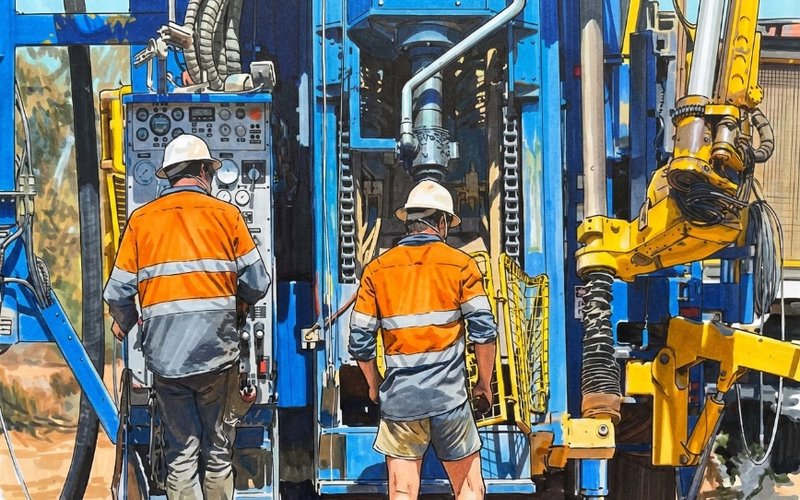

Barton Gold (ASX: BGD) (OTCQB: BGDFF) has confirmed that first assays from drilling at its Tunkillia project in South Australia support a higher-grade model for the project’s S1 ‘starter pit’ mineralisation.
The results returned broad new intervals of high-grade mineralisation within the central portion of the pit which contains a shallow, 300-metre zone of higher-grade gold within a zone of bulk open-pittable mineralisation between 80m and 100m in width.
The company considers the central zone to be of particularly high value to the S1 pit, and used the drilling to target an upgrade of the resource to measured category.
Assay Highlights
The latest assays included 13 intersections with grade x metre (g-m) intervals above 50; two intersections with g-m intervals above 100; and dozens of intersections grading more than 5 grams per tonne gold.
Highlights were 14m at 2.78g/t gold from 88m including 3m at 6.97g/t from 98m, 28m at 2.6g/t gold from 129m including 2m at 20.9g/t from 144m, and 27m at 2.68g/t gold from 60m and 44m at 3.68g/t gold from 103m including 2m at 38.7g/t from 73m and 3m at 23.5g/t from 123m.
Barton has modelled the starter pit to produce $825 million in operating profit during the first year of operations from an average grade of 1.19g/t gold.
The company is forecasting the S1 and S2 pits to yield 365,000 ounces gold and $1.3 billion in operating cash in the first 2.5 years.
De-Risking Tunkillia
Managing director Alexander Scanlon said drilling would de-risk Tunkillia’s profile by infilling higher-grade mineralisation to underwrite project financing.
“These results very much appear to support that objective and also highlight the potential for the Tunkillia system to host very high grades within key structural features,” he said.
“We expect the balance of Phase 1 infill drilling assays by January, and hope to convert the S1 and S2 optimised open pit mineralisation to measured and indicated resource categories early in the new year.”
Get the wire before the market opens.
The ASX small-cap stories that matter, filed before 9am AEST. Curated by the Small Caps desk.