
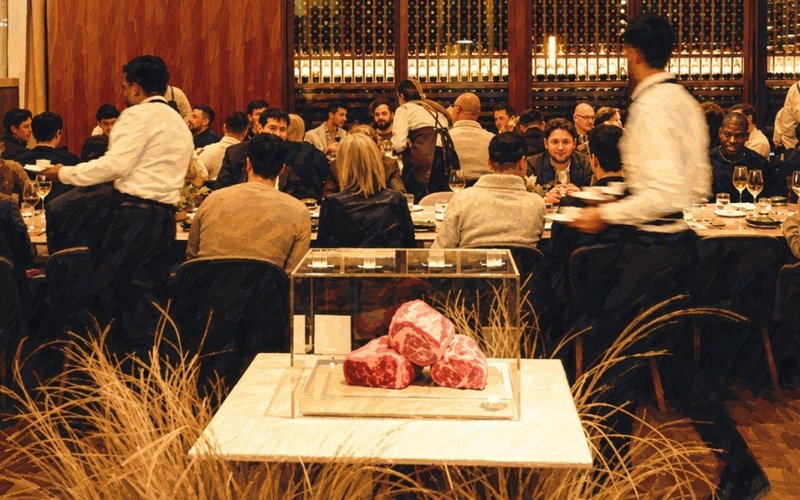

- 01Operating profit rose 63% to a record $64.8m.
- 02Revenue grew 8% as premium beef prices and volumes climbed.
- 03Statutory profit fell to $60.8m on a smaller herd valuation gain.
Australian Agricultural Company (ASX: AAC) has lifted first-half operating profit 63% to a record $64.8 million for the six months ended 30 September 2026, supported by stronger premium beef pricing and higher branded product volumes.
Total revenue rose 8% to $251m, with beef sales increasing 18% to $178.6m as average prices climbed 10% and volumes grew 5%.
The improvement in operating earnings contrasted with a fall in statutory net profit after tax to $60.8m from $82.2m, reflecting a smaller unrealised gain in the value of the cattle herd.
The group also improved net operating cash flow to $25.7m from $2.2m while continuing to invest in its cattle supply chain and international brands.
Net tangible assets increased 4% to $3.04 per share from March, gearing eased to 21.8%, and the group had $212m of undrawn debt capacity.
Premium Prices Drive Earnings
Average beef sales prices reached $20.39 per kilogram, with market allocations, product quality improvements, and demand for premium Wagyu contributing to stronger margins.
The US became the group’s largest market after sales there rose 57% to $47.5m, supported by its local team, a national distribution partnership, and realised currency hedge gains.
In Asia, its Darling Downs brand achieved 14% price growth in Korea, while Westholme expanded its presence in premium foodservice and a MasterChef Asia partnership launched in September.
Earlier-than-usual trade safeguard triggers in Korea and China and higher Middle Eastern distribution costs nevertheless complicated international sales conditions.
Herd Development Strategy
Live cattle revenue fell 11% to $72.4m as AACo deliberately reduced sales volumes to develop its herd, although average cattle prices increased 35%.
Production costs rose 24% to $3.04/kg amid higher inputs, continued Better Beef investment and differences in the timing of operational activities.
Its unrealised herd valuation gain decreased to $70.5m from $94.7m, helping explain why statutory profit declined despite stronger operating performance.
Our deliberate investment in branded beef is allowing AACo to capitalise on strong demand for our premium product, with profit growth outpacing revenue growth—it demonstrates our strategy is working and creating long-term value,” managing director David Harris said, adding that the result had been “years in the making”.
“Investment in our brands and customer relationships is paying off, and we see opportunities to further enhance our global distribution network and grow in our key target markets.”
Branded Beef Production
Construction began on an expansion of the Aronui feedlot to create capacity for future branded beef production, alongside additional flood refuge infrastructure after flooding in northern Queensland earlier this year.
Following the half-year end, AACo acquired Adelong, a previously leased backgrounding and cropping property beside Goonoo in central Queensland, to improve operational control and supply chain resilience.
“Owning it gives us long-term control of that asset and the flexibility to use it in the way that best supports Goonoo’s growth and our branded beef supply chain,” Mr Harris said.
The group also began an emissions-insetting trial with industry partners and invested in Drover, a developer of ear-tag virtual fencing technology for livestock monitoring and grazing management.
Management expects constrained global beef supply to support premium pricing but is monitoring trade restrictions, geopolitical costs, El Niño conditions, and variable rainfall over the remainder of the financial year.
Get the wire before the market opens.
The ASX small-cap stories that matter, filed before 9am AEST. Curated by the Small Caps desk.